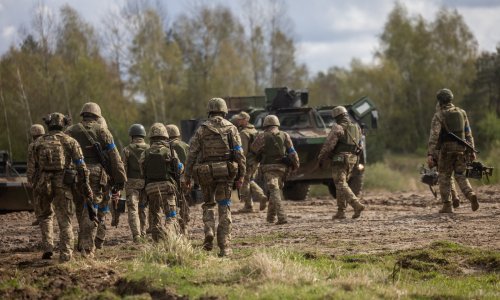
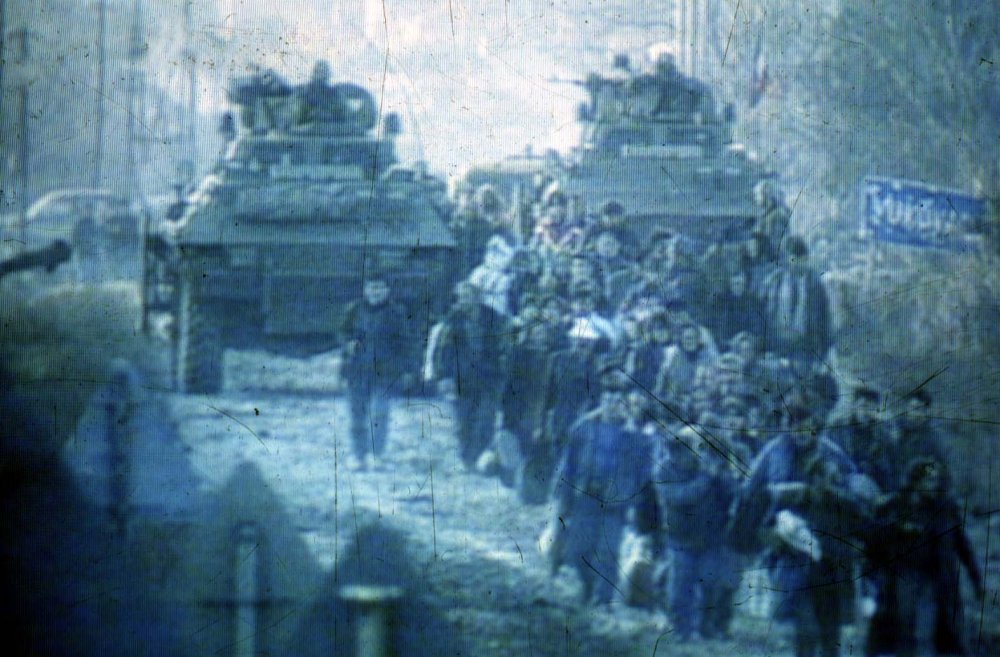

Vukovar was big in its sacrifice, but also in its ability to forgive, President Ivo Josipovic said in the eastern Croatian town on Thursday walking in a remembrance procession as part of Vukovar Remembrance Day, which commemorates the town's suffering in the summer and autumn of 1991 during a military aggression by the former Yugoslav army (JNA) and Serb militia.
"Croatia is turning towards its future and the European Union and the messages coming from here are certainly messages for a European Croatia," Josipovic said, stressing that Vukovar's sacrifice was something the Croatian people would always remember.
"We remember with respect and admiration, but we must also look to the future and at how the young people who want to live here will live. This is the message from Vukovar today," said Parliament Speaker Luka Bebic.
He does not think enough has been done or will ever be done for Vukovar, saying the people who want to live in Vukovar are not entirely satisfied, as many are jobless and do not believe that their vital issues will be solved soon. He said the residents of Vukovar do not seek welfare but jobs.
Prime Minister Jadranka Kosor said today Croatia remembered and paid its respects to about 1,700 Croatian soldiers and civilians killed defending Vukovar in 1991.
"We remember them, but we also remember about 4,000 wounded and about 500 people whose names are still on the list of detained and missing persons," she said, adding that remembering the victims of the Homeland War obliged everyone to turn to the future, without forgetting the victims.
"Everything the Croatian government is doing at this moment, from the struggle for economic recovery to the big job of joining the EU and fighting corruption, is the answer to the question of what we still have to do," said Kosor.
She underlined that "we owe it to Vukovar, its residents and all war veterans to prove with deeds that we are fighting for Croatia as a genuinely law-based state."
The last commander of Vukovar's defence, Branko Borkovic, said that 19 years after the war, "the time finally seems to have arrived for the Croatian public to ask the right questions about the defence of Vukovar."
"One should wonder why Vukovar held on for so long with minimal forces and how Vukovar broke one of the strongest armies," he said, adding that "this pilgrimage for the Vukovar martyrs who died for a free Croatia is the people's best answer to all those who would like to say, There, we had a fight, so let's hug, kiss and make up."
Borkovic said reconciliation would come to Vukovar, but neither more quickly nor more slowly than, for example, between the French and the Germans after WWII.
Mayor Zeljko Sabo said the economic situation in Vukovar was not the best but that it could be better tomorrow because the town authorities had a vision and projects, hopefully with help from the government or other institutions.
The Remembrance Procession started at Vukovar's General Hospital. Participants, led by members of the Croatian association of former Serb-run detention camp inmates, were walking down the town's streets to the Homeland War Memorial Cemetery 5.5 km outside of the town, where state and other delegations laid wreaths and lit candles. According to police estimates, there were about 15,000 people in the procession.