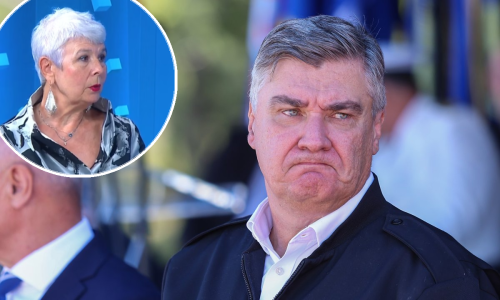
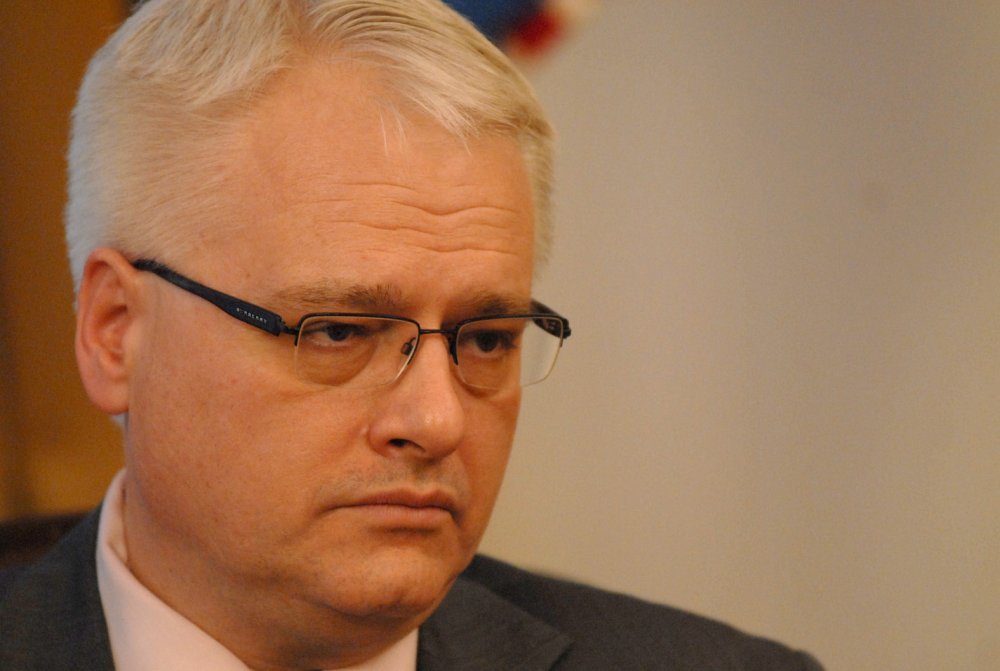

President Ivo Josipovic said in an interview with Croatian Television (HTV) on Sunday evening that Croatia is a parliamentary democracy whose Constitution states clearly that the President looks after the functioning and security of the entire system.
Josipovic's statement came after Prime Minister Jadranka Kosor said on Saturday, when asked if she thought that the President was within his powers, that "we all must strictly adhere to constitutional provisions and I will insist on it" and that Croatia was a parliamentary democracy and not a semi-presidential system.
"That's why I have been elected by citizens. The values that I represent are those that they voted for, and there is no government or prime minister, either now or in the future, that will stop me from using all the permitted mechanisms to exercise that function," Josipovic said.
He added that he had held consultations with the political parties before and that he would hold them in the future. "Those who want to come, let them come, and those who don't want to, needn't, and citizens will recognise that."
Responding to the interviewer's remark that the Prime Minister also criticised his statement about the stability of the functioning of the political system, Josipovic said that the system and stability were at risk. "Just look at how many people are discontented, how many people with very different political views are protesting in the streets, and they are certainly not protesting because they are enjoying it."
"We are not in a position in which society and the state are in danger, but we must be cautious, we must take account of what's going on. (...) I think we all have our share of responsibility for the stability of the state," the President said.
Responding to the interviewer's remark that the Prime Minister also criticised him for saying after the consultations that only the ruling HDZ was in favour of elections being held by the end of the year while all the other parties wanted elections to be held in autumn, Josipovic said that this could be checked because there is a transcript of the statement for the press.
"It's quite clear that the HDZ's statement on elections is slightly different. I'm not saying that those differences are insurmountable. It is precisely why we met, to see if an agreement could be reached on that issue," the President said, adding that in the present circumstances a discussion on an election date was not "rocking the system, but a contribution to stability."
"The purpose of the consultations on Friday was not to fix an election date and that was not the only topic discussed. We also discussed the economy and the EU," he said, stressing that the most important thing was that all the parties, except the right-wing Croatian Party of Rights (HSP), had expressed their strong support for Croatia's accession to to the European Union. He also noted that none of the major parliamentary parties called for elections before the possible conclusion of EU accession negotiations in June.
Josipovic said that in case the EU membership negotiations were not completed in June, the question of responsibility would be raised, adding that the government should think about whether it is responsible, to what extent, and what to do next.
When asked what the best date for holding elections would be if the negotiations were not completed in June, Josipovic said that this should be decided in Parliament based on a previous agreement within the ruling coalition. He stressed that he would like the elections not to coincide with the EU referendum campaign or with the referendum itself, because that might jeopardise the referendum's outcome.
"Accession to the EU is a generational goal of paramount importance, and I think that Friday's meeting dispelled the mystifications appearing from time to time that some parties and the opposition were against it," the President said, adding that completion of the negotiations in June was "homework that should have been done much sooner." "Completion of the negotiations in June will not be a great achievement because it should have been done much sooner," he added.
When asked if a delay in dealing with the issue of elections might lead to large-scale street protests, Josipovic said that this was the reason why he had called the consultations.
"The rating of individual parties and of the government is something they should think about, and my job is to see to it that a positive or negative attitude towards a party, the government or the opposition does not affect the process of deciding on EU accession," he said.