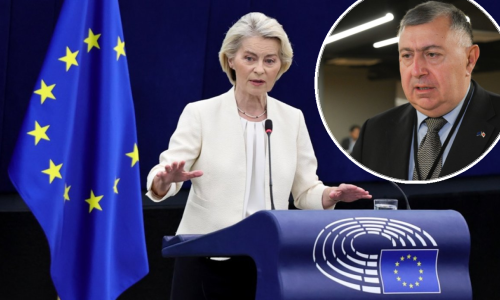


Dirk Lange, the European Commission's chief negotiator in Croatia's European Union entry talks, has said that June will be a month of a massive closing of policy chapters and opening of the remaining ones.
Lange, who is also the chief of the department for Croatia at the European Commission Enlargement Directorate-General, has also said negotiations on the Judiciary and Fundamental Rights chapter could have been opened sooner had there been full cooperation with the Hague war crimes tribunal.
Speaking to Privredni Vjesnik magazine, Lange said the chapters which could be closed next month were Transport Policy, Taxation, Financial Control, and Public Procurement, adding the Agriculture and Rural Development chapter could be closed by the end of the year.
The regulation of public procurement means preventing corruption, this is the chapter's essence, Lange was quoted as saying, adding the European Commission had seen a lot of progress when it came to legislation as well as implementation and preparation.
Langue was vaguer about the Judiciary and Fundamental Rights chapter, saying everything had been discussed with the Croatian side and that there were no new topics unfamiliar to Croatia. He added Croatia could have opened this chapter if there had been full cooperation with the Hague tribunal.
June will be the month of Serge Brammertz, the tribunal's chief prosecutor, who will (brief the UN Security Council about Croatia's progress) on the 18th. We hope to discuss this chapter with the member countries during June, Lange was quoted as saying.
He would not speculate on the opening of the chapter, but added, I think we have a chance, we are preparing the negotiating positions and draft benchmarks.
Regarding this chapter, he praised the adoption of new laws, but said they were not being enforced. He said there were many pending cases, for example at Zagreb's Municipal Court, wondering whether this example indicated the existence of the rule of law.
Lange voiced hope that the Competition Policy chapter would be opened in June, saying it depended on the outcome of the second round of privatisation of state-owned shipyards.
He announced a big debate with EU countries on that chapter but could not envisage how long it would last.