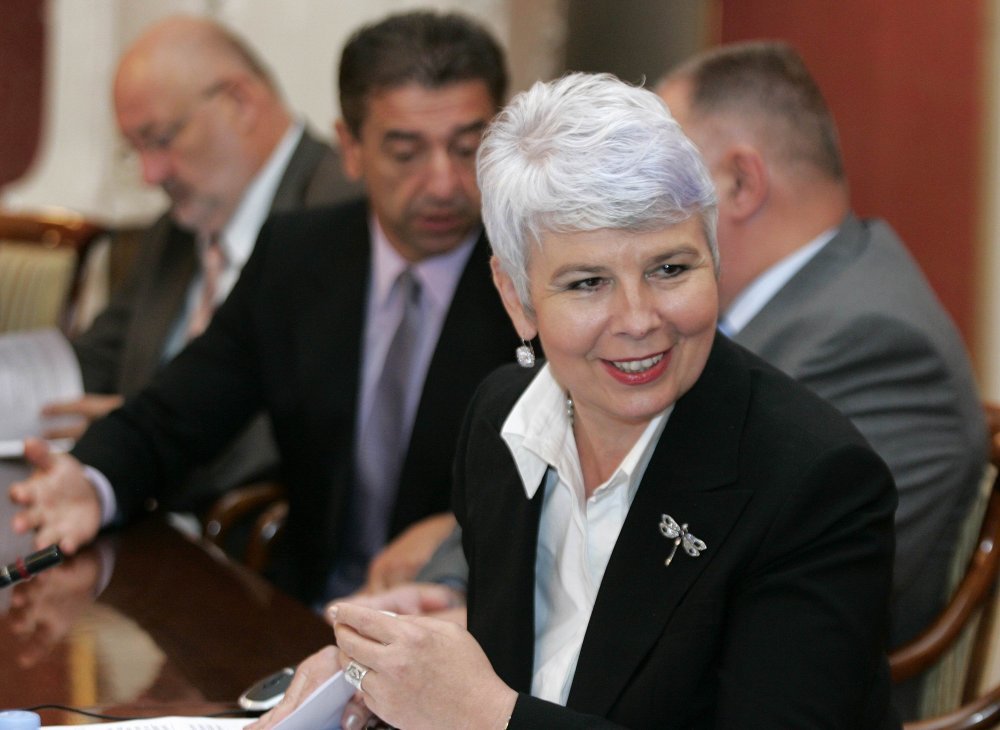

The government on Thursday adopted a report on the implementation of the National Policy this year, with Prime Minister Jadranka Kosor saying the results showed that politics and political decisions had an impact of people's lives and on whether more children were born.
"I want to point out that the political decisions of the government and parties can affect people's lives and the pro-natal policy, namely if more children are born or if the birth rate is declining," Kosor said, adding that 43,766 children were born in 2000, but births dropped to 39,668 in 2003 after national population policy measures were suspended.
When the measures were reintroduced, the number of births started growing in 2004 to reach 44,577 in 2009, she said.
"I say this for those who seek a drastic cut of... social contributions. Those aren't contributions, but an investment in the Croatian economy and this will become visible in a dozen years."
"The last six years have been really encouraging and the report shows this," Family Minister Tomislav Ivic said, adding that in 2003 the birth rate was the lowest in the past 50 years.
Ivic said one could save on everything but on children and Croatia's future, with Education Minister Radovan Fuchs saying, "We aren't building schools so that they will be empty, but full".
Also today, the government adopted a furniture design development strategy, with Forestry Minister Bozidar Pankretic saying that 11,000 people were employed in the Croatian wood-processing industry, which accounts for 1.5 per cent of GDP.
He was hopeful that the strategy would give impetus to the industry and contribute to a decrease of production costs. He said wood-processing industry imports this year declined 19 per cent from 2009, while exports went up 12 per cent.
The government also adopted a mental health protection strategy for the 2011-16 period, with Health Minister Darko Milinovic saying that Croatia's death rate from these illnesses was higher than in the European Union.
He said Croatia had 15 people with mental issues per 100,000 inhabitants, whereas in the EU the figure was 10 per 100,000.
Milinovic also said there were five times fewer suicides in coastal areas than in continental Croatia.