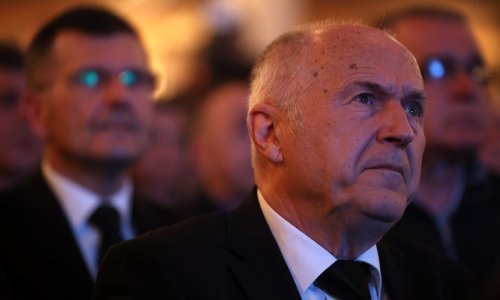
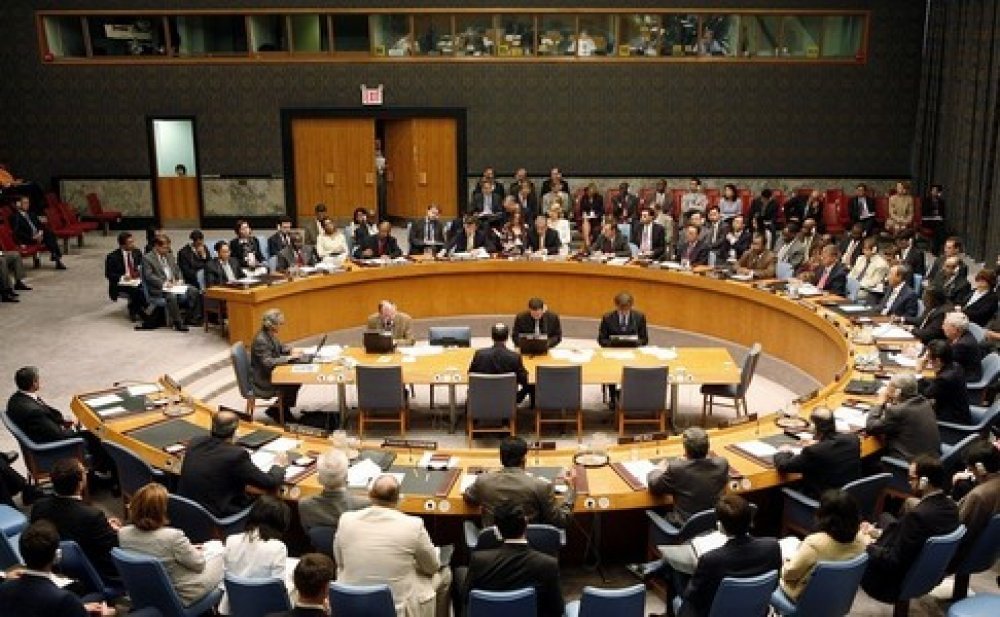

The international community's High Representative to Bosnia and Herzegovina, Valentin Inzko, presented a regular report to the UN Security Council on Thursday, saying that after a long period of stagnation, the latest elections and positive developments in the region had aroused hope for the continuation of reform in Bosnia and Herzegovina and progress towards the country's full integration into NATO and the European Union.
Inzko said that the visits to Bosnia and Herzegovina this summer by the presidents of Croatia and Serbia were crucial, because they stressed the need for reconciliation and regional cooperation. These steps, along with a recent apology by Serbian President Boris Tadic for war crimes committed by Serb forces in Vukovar and an apology by newly-elected Bosnian Presidency member Bakir Izetbegovic for war crimes committed by Bosniaks, had a positive effect in the region and in Bosnia and Herzegovina.
He said that the political situation in the country remained complex, citing lack of dialogue and compromise, mainly due to nationalist policies.
Leading Bosnian Serb politicians frequently talk about the future independence of the Serb entity, Republika Srpska, and the unviability of Bosnia and Herzegovina. Serb leaders also often negate rulings by the UN courts -- the International Criminal Tribunal for the former Yugoslavia and the International Court of Justice -- on the genocide in Srebrenica, which only increases tensions, Inzko said, adding that such rhetoric must stop.
Inzko stressed that Bosnia and Herzegovina has a future in NATO and the EU only as a single country. He said that the leading Croat party, HDZ BiH, was calling for a separate Croat entity, adding that this may not be realistic and that it was unnecessarily increasing tension in the country.
Inzko said that the activities of Republika Srpska's legislative and executive authorities were constantly challenging the functioning of Bosnia and Herzegovina, and that the lack of progress in dealing with the issue of military property was preventing the country from implementing NATO's Membership Action Plan.
In order to become fully viable and to advance towards Euro-Atlantic integration, Bosnia and Herzegovina needs leaders who will be ready to change the present policy, politicians who are ready for a compromise instead of their zero sum policy, he said.
The High Representative called upon the international community to continue its strong involvement in Bosnia and Herzegovina, and the Security Council to extend the mandate of the EUFOR mission next week.
Bosnia and Herzegovina should be encouraged to deal with the problems highlighted by the European Commission in its annual Progress Report and to begin a gradual process of constitutional change, he added.
At the session, Bosnia and Herzegovina was represented by the chairman of the country's tripartite presidency, Nebojsa Radmanovic. The ambassadors of Croatia and Serbia were also attending.
Radmanovic said that Bosnia and Herzegovina was a positive example of the involvement of the international community in peace building, and that the six-month standstill in the reform process was due to the elections.
Radmanovic said that since the end of the war in 1995 Bosnia and Herzegovina had implemented all key elements of the Dayton peace agreement, including the return of many refugees. As an encouraging example of the country's advance towards EU membership he cited the fulfilment of the 174 criteria Brussels had set for lifting visa requirements, as well as the reform of administration, judiciary and higher education.
Croatia's Ambassador to the United Nations, Ranko Vilovic, said that the new government in Bosnia and Herzegovina should continue reforms as soon as possible in the interest of Euro-Atlantic integration.
Croatia again calls upon leaders in Bosnia and Herzegovina to find strength and reach a compromise on key issues, Vilovic said, adding that there would be no progress without a consensus within Bosnia and Herzegovina and among regional protagonists and the international community.
According to Vilovic, Croatia supports constitutional amendments that will ensure full equality of all three constituent peoples and all citizens throughout Bosnia and Herzegovina.
Vilovic said that the Croats, as the smallest and most vulnerable group in Bosnia and Herzegovina, must participate in decision-making processes on an equal footing and must not be outvoted, especially in the Bosniak-Croat federation. He welcomed the EU's decision to lift visa requirements for Bosnia and Herzegovina and expressed regret that the admission of Bosnia and Herzegovina to NATO's MAP programme, which Croatia had strongly advocated, has not yet resulted in the launch of a national programme.
US Ambassador Rosemary DiCarlo welcomed the latest achievements by Bosnia and Herzegovina, the lifting of visa requirements, and the successful outcome of the October 3 elections, stressing that the United States expected formation of a government that would be capable of making progress in reforms.
She commended Bosnia and Herzegovina for assuming much greater responsibility in the international community, including its membership in the Security Council and its important contribution to the ISAF mission in Afghanistan.
DiCarlo said that the US shared Inzko's concern about some politicians in Bosnia and Herzegovina supporting convicted war criminals and negating the Srebrenica genocide.
DiCarlo said that the US strongly supported Inzko, adding that all parties must respect and implement his decisions and that the set conditions for the closure of his office had not been met yet.
Russian Ambassador Vitaly Churkin said that maintaining the Office of the High Representative in Bosnia and Herzegovina had become pointless and counterproductive, because citizens of Bosnia and Herzegovina were capable of deciding on their own future by themselves, while the international community should cooperate with elected leaders, including those in Banja Luka.