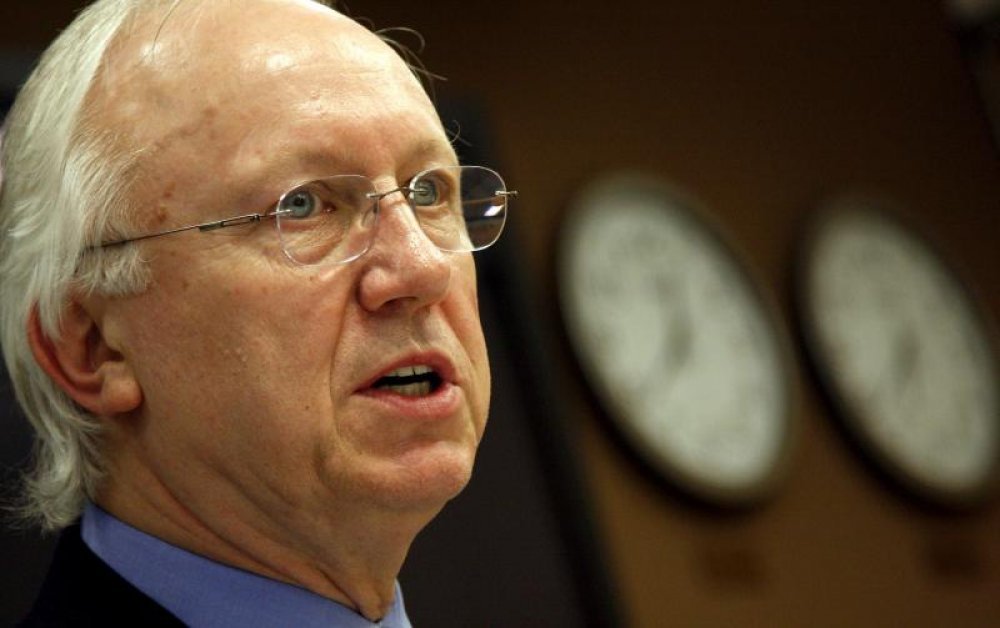

Croatia's problems are different than those of Greece, whose debt crisis is endangering the entire eurozone, and Croatia should primarily worry about the budget deficit and lack of competitiveness, Peter Harold, the World Bank's director for Central Europe, including Croatia, told Voice of America's Croatian-language website on Friday.
Croatia should be worried about the real problem of the fiscal deficit which, as in the whole region, is between four and five per cent of GDP, Harold said, adding that Greece's fiscal deficit was about nine per cent.
Asked if Croatia could be the next Greece, he said it could not. We always say very clearly that the problem is not the same, he added.
Croatia must be more competitive, it must create conditions for new jobs and it really must work on conditions for private investments, which is crucial for becoming more competitive, said Harold.
The World Bank says its predictions that Croatia's economic growth in 2012 will be below two per cent are disappointing and that this can be defeating for employment, said VoA.
The autumn session of the International Monetary Fund and the World Bank began in Washington on Friday. A Croatian delegation, led by Finance Minister Martina Dalic and central bank governor Zeljko Rohatinski, is in attendance.
World Bank leaders for the East Europe and Central Asia region (ECA), to which Croatia belongs, warned on Friday the debt crisis in the eurozone threatened the region's mild recovery and that the biggest danger came from the exposure of parts of the region to Greek and Italian banks.
The region has strong financial ties to Western Balkans which were a source of growth and very positive in 2000-08, but now they are becoming a source of vulnerability for our countries, the World Bank's vice president for the ECA, Philippe Le Houerou, told the press in Washington.
Considering the importance of Greek banks in the Balkans and Italian banks in Central Europe, every problem they have will directly impact those countries, he added.
According to World Bank data, nearly half the banking assets in Croatia belong to Italian banks.
There is a risk of the problems in South Europe spilling over, weakening the financial sector and slowing growth first in the Western Balkans, then possibly in Central Europe and then perhaps in East Europe and Russia, the World Bank's chief economist for the region, Indermit Gill, told the press.
The ECA region comprises 30 countries, spanning from Poland across Southeast Europe to Ukraine, Russia and the post-Soviet republics of Central Asia.