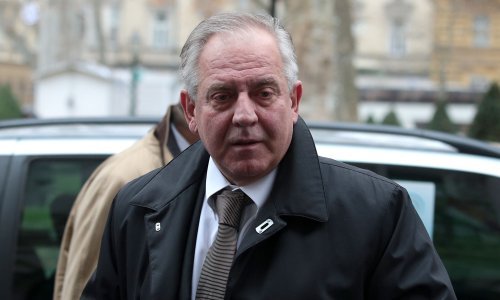


The story of former Croatian Prime Minister Ivo Sanader is a tragedy, as the fact that he transformed the Croatian Democratic Union party (HDZ) and set Croatia on the road to European integration "may have consumed him," The Economist said on Friday.
"The Sanader story is a tragedy. As prime minister, (he) turned his formerly ultra-nationalist... (HDZ) into a modern European Christian Democratic-type party. That, in turn, set Croatia on the road to European integration," said an article headlined "Nabbed".
"A man is innocent until proven guilty, of course, but it is beginning to look as if the task may have consumed him," the article said, adding that Sanader was arrested, in Austria on Friday afternoon, "because the EU demanded that Croatia... get serious in tackling corruption."
According to The Economist, Sanader was presumably tipped off that parliament would strip him of immunity from prosecution, so he "had his daughter drive him to Slovenia", adding that the Croatian police had no choice but to let him go, as no arrest warrant had been issued.
"So he escaped, perhaps hoping that if he could get to New York he could take up a post as a visiting research fellow at Columbia University's Harriman Institute."
The Economist says that Sanader stands accused in Croatia of corruption on a grand scale, citing evidence against him given by former HDZ treasurer Mladen Barisic as well as evidence, released by WikiLeaks thus week, that Croatian State Attorney Mladen Bajic gave US diplomats in January.
"The Sanader drama will play well in Croatia because few Croats believed that a former prime minister could be apprehended by the law. Too many important people — like Jadranka Kosor, the current prime minister, who served in Mr Sanader's government — would have too much to lose from a candid Sanader testimony. But now it seems that the logic of that argument might have been flawed," said The Economist.
It added that "politicians across the region must be greeting the news from Croatia with a feeling of trepidation. After all, if you can arrest a former Croatian prime minister today, then maybe you can do the same in Montenegro, Serbia, Bosnia, Macedonia or Slovenia tomorrow."