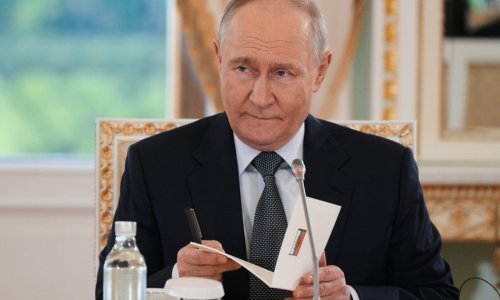
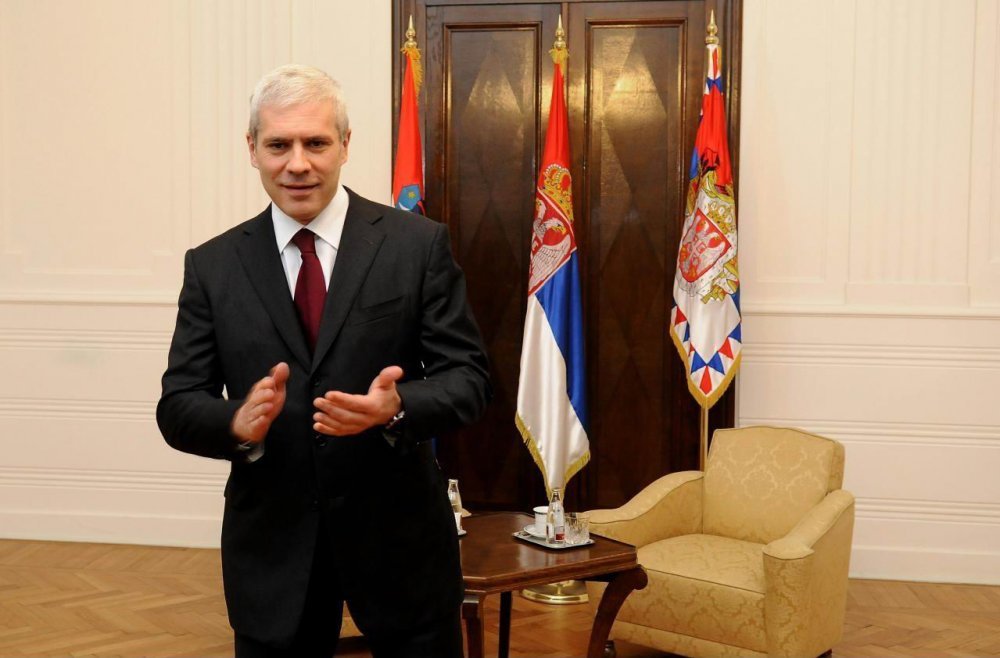

Serbian President Boris Tadic said on Thursday that by arresting Bosnian Serb wartime military commander Ratko Mladic Serbia had closed a chapter in its history and cleared its name.
"On behalf of the Republic of Serbia I can announce that Ratko Mladic was arrested this morning in an operation carried out by the Security Intelligence Agency (BIA) in coordination with the War Crimes Investigation Service," Tadic told a special news conference in Belgrade.
"We closed a difficult chapter of our history and removed the stain from the face of Serbia, all its citizens and all the Serbs wherever they may live. I am very proud of the job done and once again I congratulate all the members of the Action Team, the National Security Council and all the ministries involved in this operation," Tadic said.
According to Tadic, the arrest operation has proved that Serbia's security services, which are coordinated by the National Security Council, have made Serbia a safe country and ensured the functioning of the rule of law, and that the search for war crime suspects will increase the country's moral credibility internationally.
"It is good for Serbia that this chapter of our history is closed and that a new possibility has opened up for us to work together in the entire region on reconciliation and on creating a better and more prosperous society in Southeast Europe," Tadic said.
Tadic said he believed that all doors were now open for future negotiations on Serbia's membership of the European Union.
Tadic said that the search for the remaining fugitive, Croatian Serb wartime leader Goran Hadzic, would continue and that he would be arrested as soon as he came within reach of the Serbian authorities.
When asked if he expected rioting in the streets because of Mladic's arrest, Tadic said he did not, adding that Serbia only observed its own laws and international regulations.
When asked if the news of the arrest was deliberately broken on Thursday when the EU High Representative for Foreign Affairs and Security, Catherine Ashton, was due to visit Belgrade, Tadic said that no such calculations were made, adding that Ashton believed that Serbia was doing all in its power to arrest the fugitives from the Hague tribunal.
Speaking of a report the Hague tribunal's chief prosecutor, Serge Brammertz, was due to submit to the UN Security Council on June 6, Tadic said that now no one in the world had any doubts that Serbia was fully cooperating with the UN tribunal.