
Deputy Prime Minister and Regional Development and EU Funds Minister Branko Grcic on Wednesday presented a new territorial organisation of Croatia into two statistical regions: the Adriatic and the continental one, explaining that this makeup would enable in the best way all areas and all citizens of Croatia to apply for funds from the European Union.
Grcic told a news conference in Zagreb that "not any small area in Croatia will be endangered in any way".
He also rejected as false the interpretations that other regions that would be in the same, Continental region, with Zagreb would be therefore limited in the use of EU money.
Croatia's absorption capacity without Zagreb would be markedly reduced. The problem will not lie with money but Croatia should have the capacity to draw 13.7 billion euros from structural funds which will be available to Croatia in the EU financial perspective from 2014 to 2020, the minister explained.
He said that the government had ensured funds and programmes to make it easier for the least developed regions to prepare projects for the application and absorption of the EU funds.
"We request that all are fully engaged and committed and we will assist everyone in the preparations of projects and we will also co-finance projects of the units of home-rule in Slavonia," the minister said.
He said that the previous proposal for three statistical regions: northwestern Croatia, Dalmatian Region and Slavonian Region, had stirred up fears that the northwest of Croatia would exceed the threshold of 75% of the average EU Gross Domestic Product per capita, due to Zagreb, which might unable them to apply for EU structural funds, although they would be eligible to those funds under all other criteria.
According to Grcic, it has been eventually concluded that the most favourable territorial makeup will be two statistical regions, with one of them, the Adriatic, consisting of the current seven Adriatic counties, and the other one including the remaining 13 counties. The Continental Croatia will thus have 64.1% of the average EU GDP per capital.
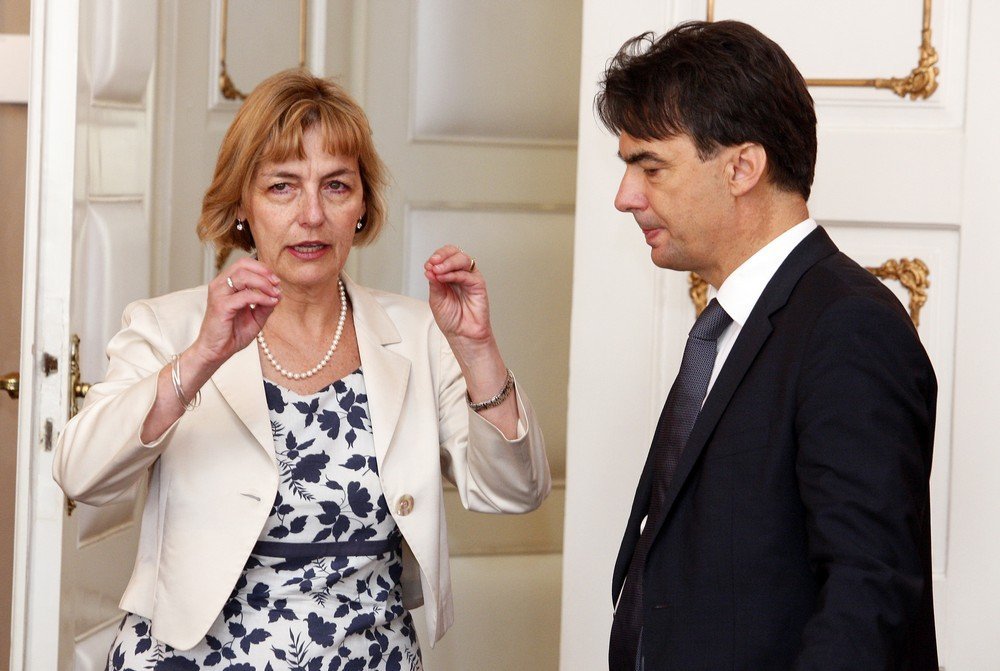
Foreign and European Affairs Minister Vesna Pusic added that all regions in Croatia should use this opportunity to absorb EU funds until 2020. "Who does not manage to develop themselves until then, will make it never," she added.
The new territorial organisation of Croatia with its two statistical areas will be in force as of 1 January 2013. As of that date, the national statistical agency is obliged to monitor the indicators of the development in the new regions, and the use of EU funds under the new territorial division is due to start in July 2013. Croatia is set to join the EU on 1 July 2013.