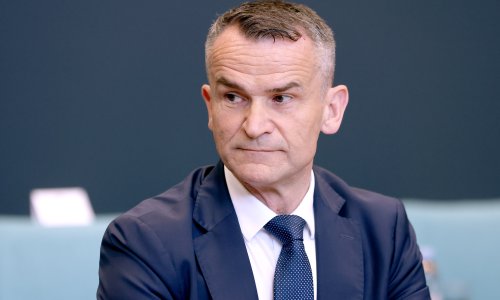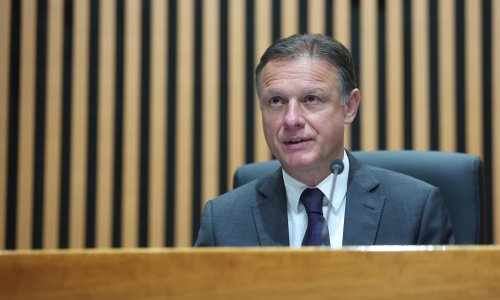
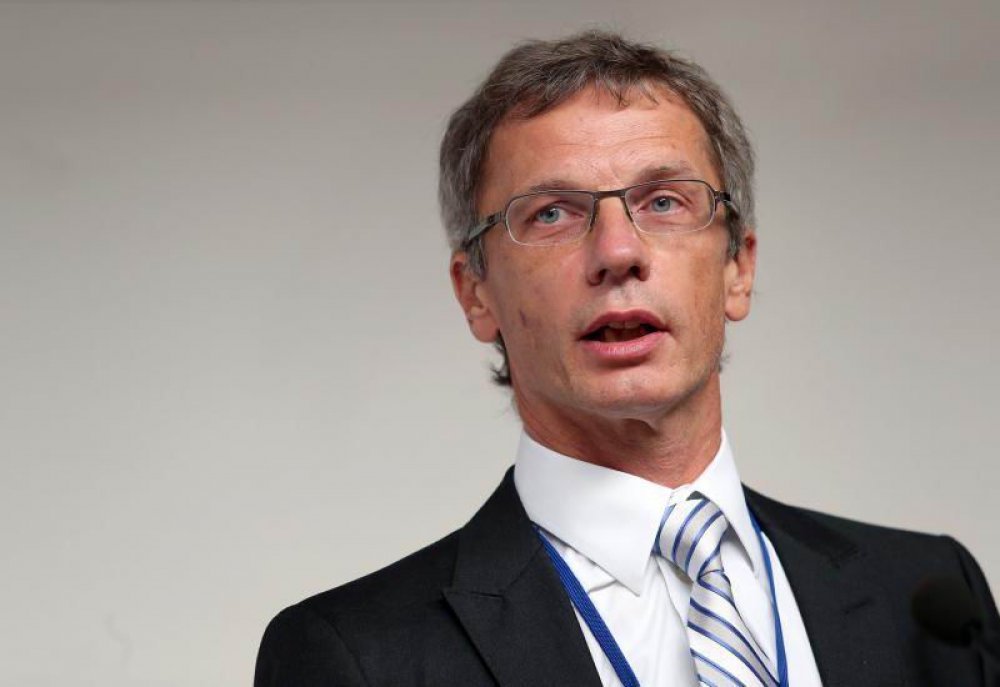

Croatian National Bank (HNB) Governor Boris Vujcic said on Sunday evening that the dilemma between the HNB and the International Monetary Fund (IMF) was a false one as Croatia needed structural reforms.
"I think that the dilemma that is being raised - the HNB or the IMF, devaluation or the IMF - is a false dilemma. This is about the country's strength and ability to implement fiscal consolidation and structural reforms which are necessary. We will have to do it anyway," Vujcic said in an interview with Croatian Television in response to the question about whether Croatia needed assistance from the IMF.
He said that the IMF's arrival was ultimately the government's decision. "It must decide whether it wants to invite the IMF and when."
Unlike Finance Minister Slavko Linic, who has said after the recent downgrade of Croatia's credit rating that the government will stop borrowing on international markets and turn to domestic banks with the help of the HNB which should release foreign currency reserves, Vujcic said there was no reason to stop borrowing abroad.
"We will not release our foreign currency reserves. At this moment it is certain that the government will meet part of its needs by borrowing on the domestic market, but there is no need to stop borrowing on the international market. Because of the general situation on the market, the cost of borrowing is still lower than last time," the governor of the central bank said.
He said that if the government were to borrow on the domestic market alone, that could lead to a rise in domestic interest rates and the private sector could be pushed out, which in turn would adversely affect GDP growth and could create pressure resulting in a fall of international reserves and a further downgrade of the credit rating.
Vujcic said that he would agree with the Finance Ministry on a development plan for government financing for next year. "At the moment the international market continues to be open to Croatia and we should plan to borrow some of the money on the international market."
When asked whether the HNB, which has 30 billion kuna in mandatory reserves and 15 million euros in its own foreign currency reserves, should make some of that money available to the government and the business sector in light of the economic crisis, Vujcic said that Croatia was borrowing in foreign currencies and had to repay its debts in that particular currency and not in kuna.
"The fact that we can print money will not help in repaying our foreign debt. We have to realise that Croatia must carry out fiscal consolidation, reduce its needs for borrowing abroad and implement structural reforms so that it can produce a surplus of foreign currency for debt repayment. The amount of money we have borrowed so far is equivalent to one whole Gross Domestic Product and the monetary policy cannot be of much help here," the HNB governor said.
Commenting on ideas for devaluation of the kuna after the downgrade of the credit rating, Vujcic said that a devaluation would certainly aggravate the situation, deepen the recession and increase household indebtedness, which in turn would lead to a further decline of GDP and would push the country deeper into crisis. "No devaluation, no targeted inflation can help us, but only domestic discipline," he concluded.