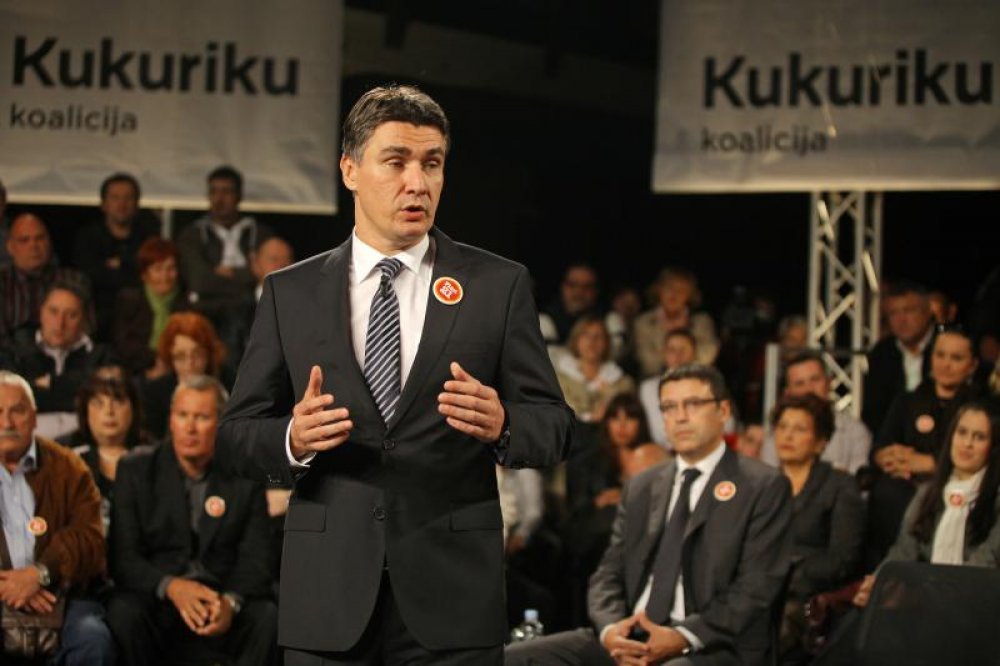

Leaders of the Opposition coalition led by the Social Democratic Party (SDP) said in Zagreb on Saturday that with a new leadership, once it joined the European Union, Croatia would be a country whose influence surpassed its size.
"Croatia in the EU will be a country whose influence can surpass its size, and we have the necessary strength and ability to achieve it," Croatian People's Party (HNS) vice-president Vesna Pusic said at an event at which the coalition leaders spoke to members of the public about their election platform, the topic being "Agenda 21 - Foreign Policy and EU Integration".
Neven Mimica of the SDP said that the EU provided a good framework and rules a good government should be able to make the most of, notably in the first years of EU membership.
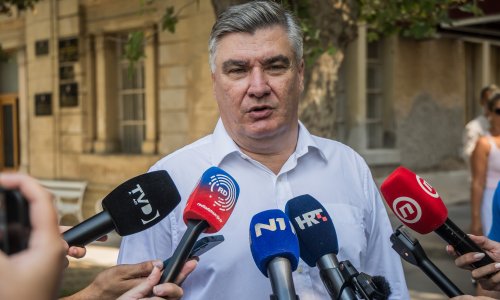
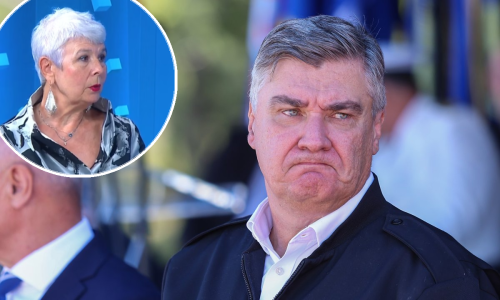
SDP president Zoran Milanovic said that Croatia's EU entry gave the best chances to those who wanted order, work and freedom.
He added that once it came to power, the opposition coalition would not act "as masked avengers", but be "civilised and conscious leaders who know what is good for their country". He added that the new government would care for all who were competent at what they did because it was aware that many such people worked in the state administration.
Milanovic also said that if the coalition came to power, it would not act irresponsibly regarding the country's constitution or change laws overnight at the urging of senior political officials.
"We will win, but it won't be easy. Milanovic will be Prime Minister, but it won't be easy for him, because we don't know what we will inherit from the incumbent government," Istrian Democratic Party (IDS) leader Ivan Jakovcic said.
HNS president Radimir Cacic said that as parliamentary elections approached, the current government was increasingly demonstrating hatred and panic.
Addressing members of the public and supporters, who gathered in large numbers at the presentation of the coalition's platform, the coalition leaders underlined as one of their "European" projects the building of an open society, primarily in the region. It is within that framework that Croatia should prove itself as a leader, not only on the political front, but also on the front of culture, science and media, it was said.
Speaking of development projects that are expected to be financed to a great extent with EU funds, the coalition leaders mentioned the cross-border project Croatian Provence in the currently undeveloped Dalmatian hinterland.
"We want a country where all will feel good and where people will not be ashamed of their government," said Vesna Pusic of the HNS.
Commenting on the role of Josip Broz Tito in Croatia's history, Milanovic said that Tito would be remembered as an autocratic ruler but also as the leader who made it possible for Rijeka and Istria to again be part of Croatia and who enabled the adoption of the 1974 Constitution that provided legal preconditions for Croatia's independence.