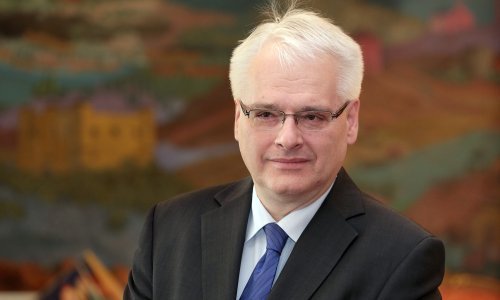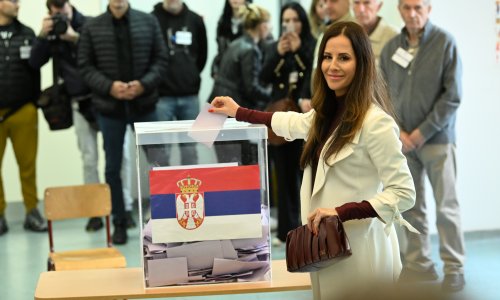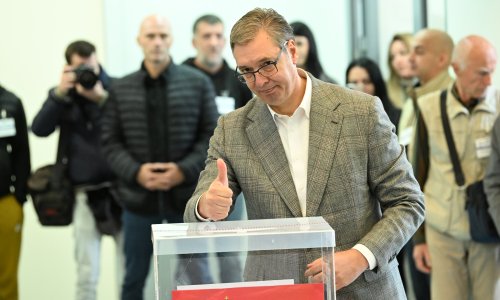
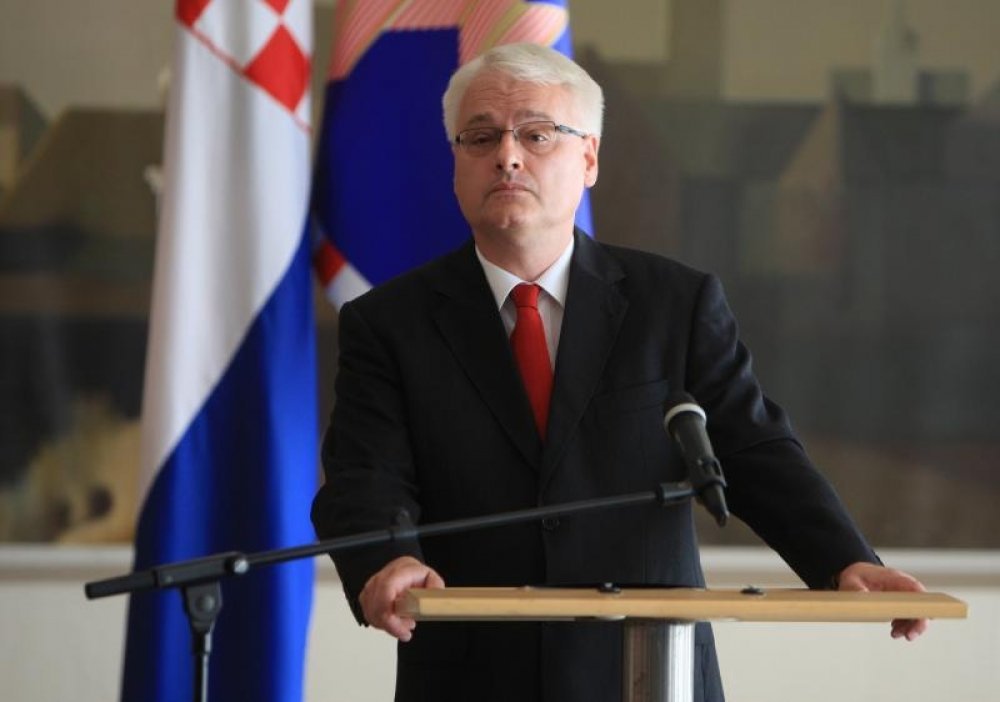

In a televised address from his office on Wednesday evening, Croatian President Ivo Josipovic called on all citizens eligible to vote to go to the polls in the December 4 parliamentary election, stressing that the current model of social and political relations had been used up and that Croatia was at a turning point, as well as that elections in the worst time of crisis can be a moment of change, new optimism and enthusiasm.
"I believe that the forthcoming election can be it. It is up to you, as well as to the participants in elections - coalitions, political parties and independent slates. For elections to be a true act of the citizens' democratic choice for the country's future, participants in elections must conduct their campaigns responsibly, focusing on crucial issues such as social development, ways of overcoming the political, economic and moral crisis, and Croatia's future in the European Union, our position on the global scene, and our role in the region," Josipovic said, calling on the voters to vote for a better and more just Croatia.
"The ballot is still the most powerful weapon of democracy and it is in your hands," Josipovic said, adding that he did not doubt that Croatia had enough honest people, with strength and vision, capable of helping build a better future.
He expressed confidence that mudslinging campaigns and campaigns focusing exclusively on the past without a look to the future would fail.
Noting that the past was not irrelevant, he said that the recent past had brought Croatia the historic victory in the Homeland War, independence, democracy and many positive social changes.
"Membership in NATO and the conclusion of EU accession talks confirm that Croatia has achieved many high democratic standards. The last parliament made a contribution to that as well."
He recalled his presidential campaign in which he spoke about new equity and the imminent crisis of liberal capitalism whose greed, lack of socially responsible business, lack of morality and honesty - in business, politics and society alike - had caused a global crisis the current generations had not experienced before.
"In Croatia that crisis had its own specific reasons such as war profiteering, partially criminal ownership transformation and privatisation, corruption, and insufficiently developed democratic institutions," Josipovic said, warning that the economic and general social crisis, the growing poverty, unemployment and the many problems in the functioning of state institutions had caused in many citizens justified anger, as well as fear, apathy and hopelessness.
"... Elections provide an occasion to remind ourselves that with our voice we can influence our future.
"After the first 20 years, one stage in the development of our society has ended and today, ahead of elections, Croatia is at a crossroads," Josipovic said, adding that citizens recognised the need to open a new chapter in the development of society through reforms and eradication of corruption.
"Participants in elections are rightfully expected to offer citizens the prospect of development, a vision of Croatia's development in the next decade."
Noting that Europe and many countries and organisations had programmes and clear concepts for development in the second decade of the 21st century, Josipovic said that Croatia, too, notably its leaders, should plan the development of the country.
"Even if a complete project of development is not likely to be devised before elections, I expect at least its outline and readiness on the part of the next government to gather, upon taking office, all creative forces of the Croatian society in planning our future. Like many other citizens and organisations, I, too, want Croatia's development concept to be a road map for a society of success, prosperity and equity."
Croatian citizens can rightfully ask that in the new, more equitable relations, Croatia be an active society, an innovative society and a society of quality living, Josipovic said, adding that he expected participants in the election campaign to give voters answers as to how Croatia could become such a society.
An active society presupposes, among else, equal opportunities for all people, notably the young, work availability and the exercise of the right to work, openness to enterprise and investment, transparency of institutions and responsibility of politics, a stronger role of the non-governmental sector, and the social inclusion of individuals and social categories, the president said.
In an active and equitable society, everyone can live in dignity from their work or deserved pension, he said, adding that an imperative part of that concept were the willingness to strengthen the rule of law, respect for all human rights and democratic institutions, and absence of discrimination on any ground.
Free media as part of an active and democratic society must be free of all political, advertising or any other pressure, said Josipovic.
"Equal education possibilities, investing in science and innovation, introducing new technologies, using Croatia's comparative advantages, and joining the European and global scientific and educational zone are the prerequisites of our progress."
Josipovic also pointed to the need to protect natural resources, such as soil, sea, water and healthy food, to accept renewable energy sources, safeguard citizens' health, and make cultural goods, information and new technologies accessible as a prerequisite for Croatia to be a society of quality living.
He said an equitable society ensured an appropriate quality of living also to special categories such as the disabled, war victims, the sick and the elderly.
"Croatia can be a fair society only if it is an active and innovative society, a society of quality living, a society seeing to both material and spiritual values," Josipovic said, telling citizens that the upcoming parliamentary election was their chance to define "their future, the future of their children and of our homeland Croatia" by giving their vote and confidence to a coalition, a party or an independent slate.
"The election is an opportunity for Croatia, its next parliament and government, empowered by new democratic legitimacy, regardless of colour, to turn with determination and optimism a new page in our history. I myself am optimistic about our future," Josipovic said, calling on constituents, notably all young ones and those voting for the first time, to exercise their constitutional right and go to the polls.