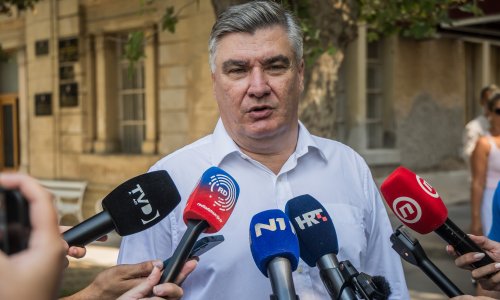

The amount of money that will be available to Croatia in EU funds in the next seven-year budget period practically will not be lower than the amount proposed by the European Commission, Prime Minister Zoran Milanovic said on Tuesday.
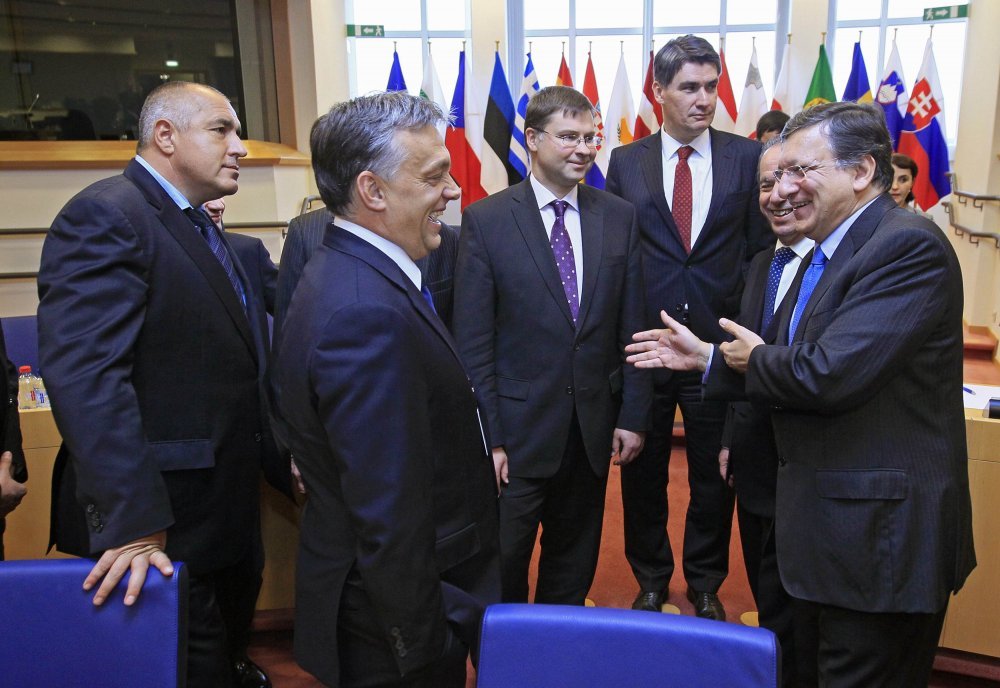
"In the worst case it will remain the same. Assuming we absorbed the maximum amount, it would be very small oscillations," Milanovic told the press in Brussels where he was attending a meeting of heads of state or government from 15 EU member states that form an informal group known as "Friends of cohesion".
This group argues that austerity measures in the Multiannual Financial Framework for the 2014-2020 period should not affect cohesion funds that are used for projects to reduce the gap between rich and poor regions within the EU.
Under the Commission's proposal, during the 2013-2020 period Croatia would have access to 13.7 billion euros, and the greatest part of this amount, 8.7 billion euros, comes from the cohesion and structural funds. The 8.7 billion is not a guaranteed amount, but can be drawn based on projects that meet strict criteria. Since it is unrealistic to expect that the whole amount will be absorbed, which no country has ever managed to do, a possible reduction will not have any practical impact on Croatia.
In a debate on the Multiannual Financial Framework, the EU's key document for the next seven-year period in which Croatia will be a full member of the Union, countries are divided into two camps - friends of cohesion and net payers which contribute to the EU budget more than they get from it and which demand that in times of crisis cohesion policy must not be exempt from austerity measures and budget cuts.
The friends of cohesion support the European Commission's proposal, while rich countries want the proposed amount to be reduced by 75 billion to as much as 200 billion euros.
The Commission has proposed a budget of 1.033 trillion euros in commitments, which is 1.08% of the EU's GDP, and 988 billion euros in payments, which is 1.03% of GDP. EUR 376 billion has been allocated for cohesion policy.
EU president Cyprus has proposed that the Commission's proposal be cut by at leat 50 billion euros, of which 12.5 billion would be taken from cohesion funds and 11 billion from funds intended for agriculture and rural development. European Council President Herman Van Rompuy has put forward a proposal for a budget reduction amounting to 75 billion euros.
According to informal calculations, the amount from cohesion funds for Croatia could be reduced by about 40 million euros annually, or about 280 million over the seven years. The exact amount will be known when the Multiannual Financial Framework has been agreed.
Milanovic said that the amounts being discussed by the two groups were actually small in relative terms.
"This is actually a small amount, small in terms od the European economy. The rich, namely nett-payers, want the budget to shrink and the poor do not. Croatia, which will receive more, should take an attitude 'it is all the same to us', however, it is not all the same to us because in the long run the story with the European Union for us makes sense only if we make a financial gain out of it, meaning that we should get back more than we have invested," Milanovic said.
The time frame in which it will be able to draw funds earmarked for each budgetary year is exceptionally important for Croatia. Under the current proposal, funds earmarked for one budgetary year can be contracted for another two years and Croatia asks that this period be extended to three years, which would increase its chances to significantly increase the absorption of the funds. All new EU member countries had that possibility.
Milanovic stressed Croatia would not be denied EU funds in case the reconstruction of its shipbuilding industry failed. "I don't fear that. Rule for the shipbuilding industry are very precise and the consequences in case of a failure are not the denying of EU funds," Milanovic said. He added Croatia would keep its shipbuilding industry but with fewer employees.