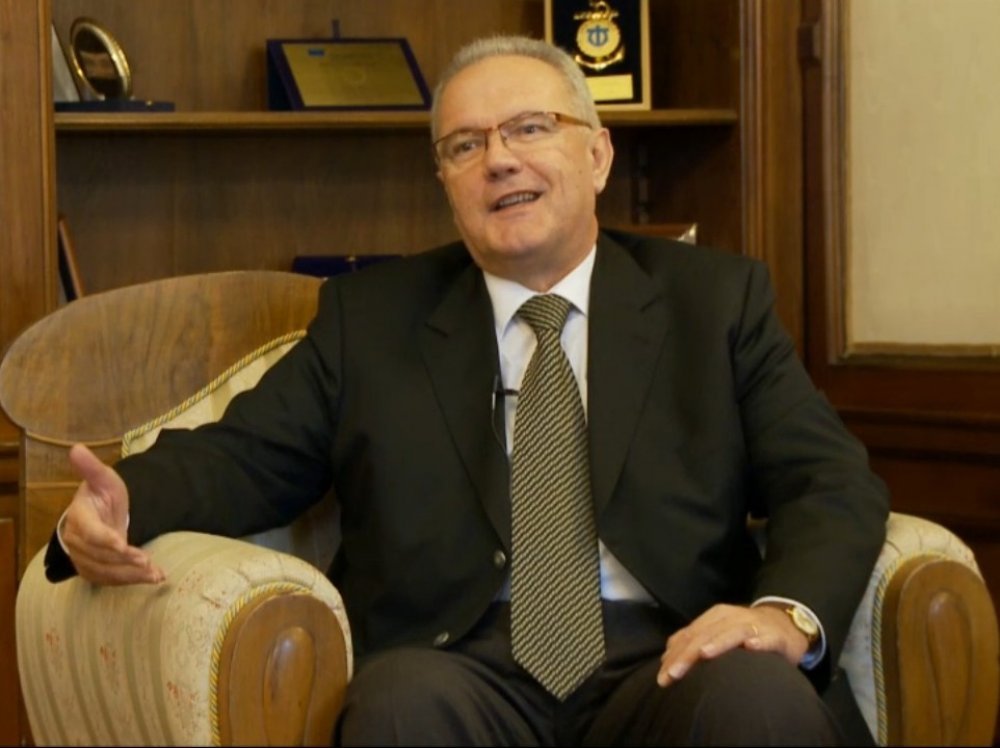

Croatia is satisfied with conclusions of the Council of the European Union on the monitoring report, which read that it is on the right track in its preparations for EU membership, Croatian Deputy Prime Minister Neven Mimica said in Brussels on Tuesday.
Mimica today attended a meeting of the General Affairs Council which discussed and adopted, among other things, conclusions on the Monitoring Report published by the European Commission on April 24 regarding the three most difficult policy chapters of EU legislation (acquis communautaire).
"Nothing that was said at the Council is unexpected, and we can be satisfied," said Mimica, who could not attend as an observer the part of the meeting focusing on Croatia.
He added that according to information available to him, only a few countries participated in the debate and that its conclusions confirmed what the EC had stated in its report.
According to diplomatic sources, participating in the discussion were representatives of Great Britain, the Netherlands, Sweden and Slovenia.
The Council has assessed thoroughly the Monitoring Report and tables and notes with satisfaction that overall, Croatia's preparations for EU membership are on track and that Croatia has reached a considerable degree of alignment with the acquis communautaire. In this perspective, the Council calls on Croatia to use the time remaining until accession to step up its efforts in building on the reform it has implemented and the track records it has developed in the accession negotiations, notably in the fields of Judiciary and Fundamental Rights; Justice, Freedom and Security; and Competition Policy, as well as the other areas of the acquis identified by the Commission as requiring further efforts, read the conclusions of the General Affairs Council, which consists of foreign or European affairs ministers of the member-countries.
The conclusions also welcome the recommendations the EC gave Croatia in April 24 Monitoring Report for the said policy areas.
The Council also takes note of the state in the process of the ratification of the Croatia-EU accession treaty and expects to welcome Croatia as its full member on 1 July 2013 provided that the process of the ratification of the treaty is completed in the EU member-states. In this context, the Council calls on the European Commission to continue monitoring Croatia's preparations for its accession and expects a comprehensive report and supplemented monitoring tables which the Commission is due to make this autumn, according to the conclusions.
In its first pre-accession monitoring report on Croatia of 24 April, the Commission expressed objections to changes to Croatia's conflict of interest legislation regarding the appointment of senior politicians to the state companies' supervisory boards and to changes to the police legislation which Croatia has given up in the meantime, as well as to the introduction of additional fees for providers of mobile telephony services and the postponement of the enforcement of the law on public distrainers.
Asked about the current stage of talks with potential investors interested in buying the shipyards "3. maj" and Brodotrogir, Mimica said the government had made some very difficult financial decisions that were expected to facilitate the bankruptcy procedure in the Kraljevica shipyard and the signing of a privatisation agreement for Brodosplit, while for "3. maj" and Brodotrogir there were several potential investors, who were expected to make it known soon if they wanted to embark on the privatisation of the two shipyards.
He added that there was more than a 50% chance that those investors would buy the two shipyards. Declining to reveal the investors' identity, Mimica said he did not want to do it without their consent.
Speaking of the government-sponsored amendments to the police legislation and the law on the prevention of conflict of interest, Mimica said that the law on police would probably not be changed, and that consultations were still under way with the European Commission on the law on the prevention of conflict of interest.
"Maybe on the EC's part there is more readiness to clarify the substance of what we intend to change in that law," Mimica said. The government has proposed amending the law on the prevention of conflict of interest to make it possible to appoint politicians to state companies' supervisory boards.
Later this afternoon, Mimica will meet Home Affairs Commissioner Cecilia Malmstroem to discuss the issue of linking Croatian regions by a corridor to pass through Neum, a coastal town in southern Bosnia and Herzegovina.
Mimica expressed confidence that Croatia would receive the EC's consent to control- and interruption-free passage through the Neum corridor. Unobstructed traffic without Schengen regime controls along the Neum corridor would refer only to passenger transport, while different rules would apply to cargo transport.
Mimica added that the status of the southern Croatian port of Ploce was not part of talks on the Schengen regime. "As far as the Ploce port is concerned, we will first determine with the Bosnian side better ways of using the port, and then we will agree with the European side to what extent the transport of certain goods from the border with Bosnia and Herzegovina to Ploce can be free or facilitated. We are aware that not all goods will be able to pass freely, particularly live animals and products of animal origin."
Mimica also said that in the current economic situation, Plan B - building a bridge to link Croatia's southern Peljesac peninsula with the mainland - was unlikely.