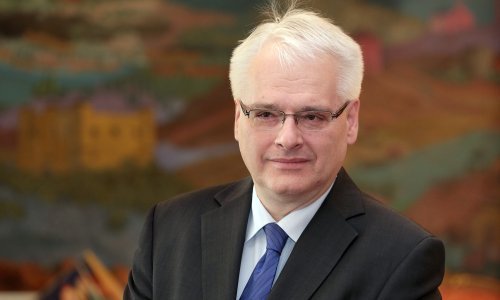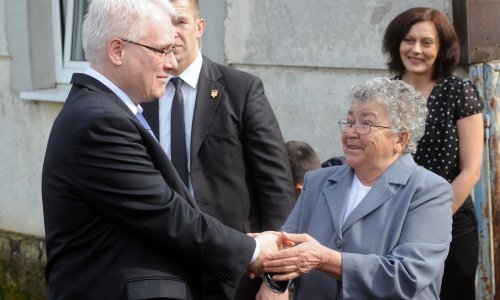
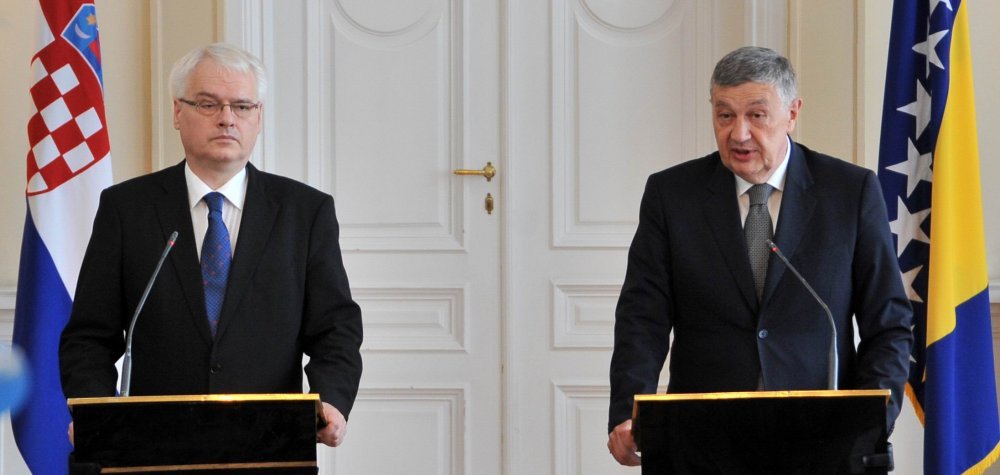

Croatian President Ivo Josipovic said in Sarajevo on Monday that after Croatia's admission to the European Union, both his country and he personally would continue to treat Bosnia and Herzegovina as an exceptionally important neighbour and partner.
Josipovic, who is on a two-day official visit to Bosnia which is also his first visit abroad since Croatia joined the EU on 1 July, met with members of the Bosnian collective presidency and after the talks he said that further development of relations with Bosnia and other countries in the region remained a priority for Croatia. He stressed that special attention would be attached to assisting the neighbouring countries on their path to European associations.
"The Republic of Croatia without reservation supports Bosnia and Herzegovina's European path," the Croatian president said, adding that Croatia's experience from its EU membership talks was now at Bosnia's disposal.
Josipovic said it was necessary to secure the continuation of successful business cooperation and resolve outstanding issues with Bosnia and Herzegovina.
He listed border demarcation, property relations, succession, infrastructure and energy capacities as issues the two countries needed to focus on.
"It is time and it is necessary to have relevant bodies in both countries, and I primarily refer to the governments, be even more determined to resolve these issues," Josipovic said.
The president of the Bosnian Presidency, Nebojsa Radmanovic, once again congratulated Croatia on joining the EU, adding he expected Croatia's EU membership to have a positive impact on Bosnia as well.
"Bosnia expects a lot from Croatia, as its neighbour and as an EU member state," Radmanovic said adding that Bosnia appreciated Croatia's commitment to helping countries in the region on their journey to Euro-Atlantic associations.
Commenting on outstanding issues between the two countries, Radmanovic said they needed to be resolved as soon as possible, expressing hope that the two countries' good relations in bilateral trade would not be affected by Croatia's EU entry.
Asked about a possible construction of the Peljesac Bridge, Radmanovic said this was a decision to be made exclusively by Croatia and the only condition Bosnia would set is that the possible construction did not bring into question Bosnia's access to high seas.
Josipovic said a final decision would be made after consultation with the EU, adding however, that possible construction would in no way limit Bosnia and Herzegovina.
The two officials also underlined the need to continue economic cooperation regardless of Croatia's departure from CEFTA, adding that Bosnia must implement EU standards in order to be able to continue to export its goods to Croatia.
"This does not mean the cessation of trade relations but searching for a solution," Radmanovic said reiterating Bosnia's position that economic relations bust be regulated differently following Croatia's leaving CEFTA space.
After meeting members of Bosnia's presidency, Josipovic also held talks with the Bosnian parliament leadership.