
The European Commission is following developments on the Croatian dairy market, and a similar situation happened in the European Union in 2009 when costs of milk production exceeded the purchase price, spokesman for the EU Agriculture and Rural Development Commissioner Roger Waite said in Brussels on Monday when asked to comment on ongoing protests by Croatian dairy farmers.
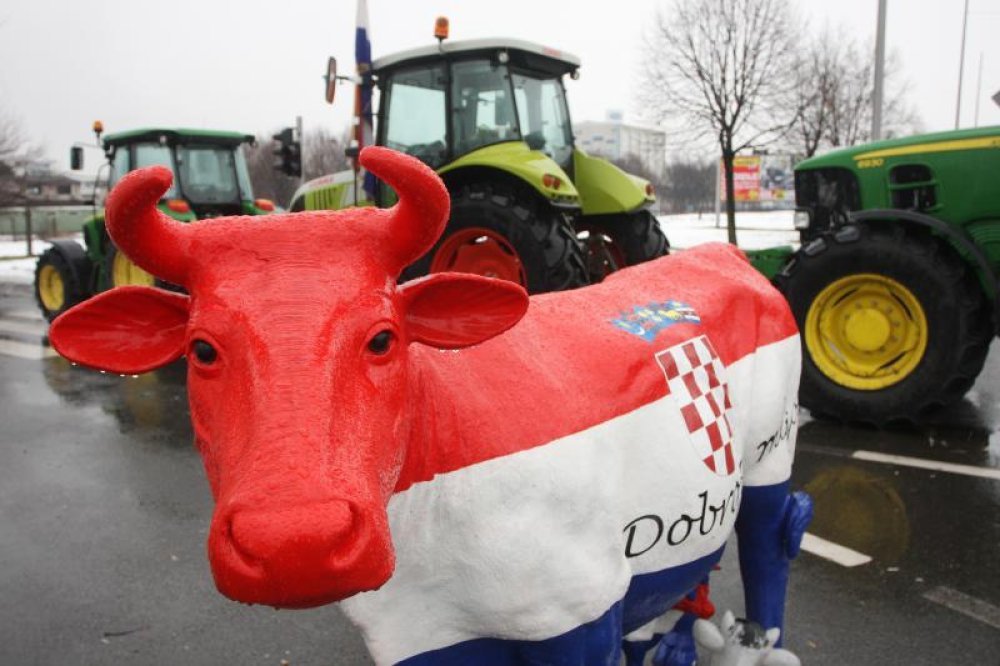
Croatian dairy farmers, unhappy with a reduction of the purchase price of milk to 2.30 kuna, have been protesting in Zagreb and Bjelovar for seven consecutive days and their protest is spreading to other areas of the country.
Waite said that in 2009 the European Commission had a safety net with which it stopped the fall of the purchase price of milk, adding that the low price remained for relatively long. After the crisis of 2009, the Commission proposed a legislative package that has recently been adopted by the European Parliament and whose main purpose is to strengthen the position of milk producers in negotiations with supermarkets and major milk buyers.
The European Commission believes that the only way out for small milk producers is to join in larger production organisations because individual producers do not stand much chance in negotiations with large retail chains that dictate conditions.
At this moment most of the added value goes to those that are at the end of the production chain, and the aim is to move it towards its beginning, so that milk producers also get their share, Waite said.
Waite said that next year, after Croatia joins the EU, Croatian milk producers would be able to use a part of the ramified safety net. The Commission is preparing new proposals that will make it possible for producers to get money as soon as possible in cases when market interventions are necessary, he added.