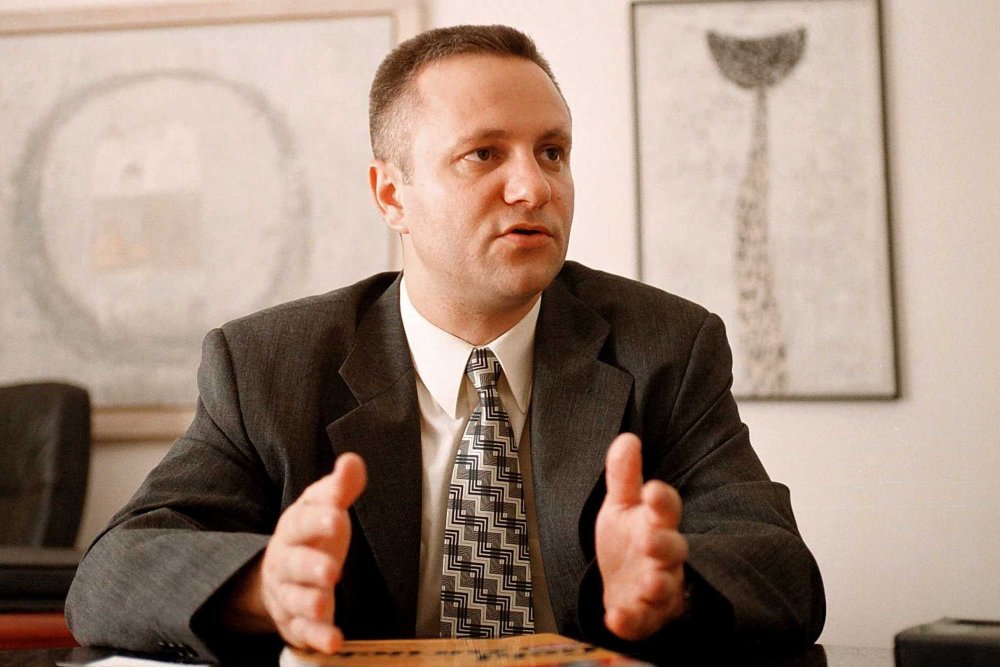

The outgoing Serbian Economy and Finance Minister and leader of the United Regions of Serbia (URS) party, Mladjan Dinkic, said on Wednesday that the decision to throw him out of the ruling coalition actually marked the start of a process that would end with the resignation of Prime Minister Ivica Dacic.
Dacic announced on Tuesday evening that there would be no room any more in the government for Dinkic and two ministers from the URS, after which Deputy Prime Minister Aleksandar Vucic said that he and his Progressive Party (SNS) supported the decision.
Dinkic told the B92 television network on Wednesday that he was not surprised.
"I have expected this to end this way, because I am aware of the commitments from the Brussels agreement and I know that this is not the time for an early election and that the SNS at this moment cannot have a majority without Dacic. For me, this is not the end but the start of a process that will actually end with the departure of Ivica Dacic," Dinkic said.
Dinkic described the present government as strange, saying that it had functioned excellently during the first nine months in office. He said that the greatest successes of his department were stabilisation of public finance, avoidance of bankruptcy and reduction of the budget deficit.
Dinkic said he would return to the National Assembly where he had served as chairman of the URS group before he was appointed Minister of Finance and Economy. He said he would be a "constructive opposition".
The present coalition government, formed on 27 July 2012, is composed of three coalition groups led by the Progressive Party of Aleksandar Vucic, the Socialist Party of Prime Minister and Interior Minister Ivica Dacic and the United Regions of Serbia headed by Finance and Economy Minister Mladjan Dinkic. The government is currently in the process of a reshuffle, and Vucic has said that the new composition of the government will be known after 20 August.
Vucic said earlier on Wednesday that his party would remain in the government and that now was not the time for an early election because it would slow down the country in the European integration process.