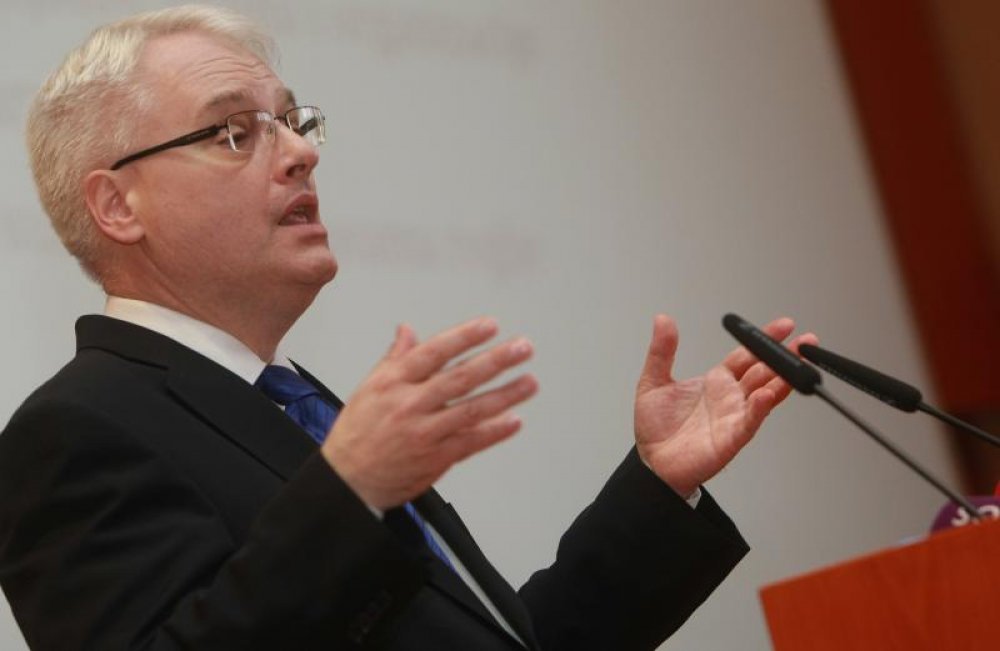

During a visit to the coastal city of Split on Saturday, President Ivo Josipovic expressed disagreement with the statement by Serbia's President-elect Tomislav Nikolic that Vukovar was "a Serb town", noting that a change of positions on Nikolic's part would be a precondition of Croatia's cooperation with Serbia.
Asked to comment on Nikolic's denying to have told a German paper that Vukovar was a Serb town and that Croats had no reason to return there, Josipovic said it was good if he had denied it, but that the newspaper article was "still there."
"In any case, we know that the history of his relationship to Croatia is bad. I have expressed a wish, belief and hope that he will change his position and our cooperation will be conditional on that," said Josipovic.
Asked to comment on a recent media report that some officers at the Defence Ministry have been found to be receiving special allowances along with their salaries, Josipovic said that one should see "why there exist regulations that make such things possible."
"It is a matter of fairness. I believe that time has finally come to identify in the whole society things that are obviously unfair and need to be changed," he said, adding that in the current time of crisis "one should put an end to privileges which have neither moral nor economic justification."
Commenting on an opinion poll indicating an increase in pessimism in Croatia and a decline in politicians' rating, including his own, Josipovic said that he may be even satisfied with receiving support from 73% of polled Croatians, but that more than reflecting his personal rating, it reflected the society's perspective.
He said that the decline in his rating was normal because there was a widespread feeling of dissatisfaction in society and that all state institutions were being rated poorly by citizens.
"We all have to find the strength for optimism without which no society can make progress. I have been saying, and expect other politicians to do so, that we should find a way to underline the good things, and the media could contribute to it as well. Not everything is gloomy and bad."
Asked what the government could do to improve the economic situation, Josipovic said that the government had reduced the budget and that some measures were being introduced.
"The job of implementing painful and difficult reforms must be done in a resolute manner and I believe that we will slowly but certainly overcome the crisis," he said.
Commenting on requests that government ministers have their salaries reduced as a sign of solidarity with other citizens, Josipovic said that the matter could be considered but that its economic impact would be insignificant.
Responding to a reporter's remark that the government should consider reducing the salaries of its ministers, Josipovic said the remark should be addressed to the Prime Minister.
"We also have to take care not to... reduce the motivation," he said, adding that "salaries must reflect the society's potential."
Asked if he would agree to have his salary cut, Josipovic said he would and that he would respect "every decision of the Parliament."