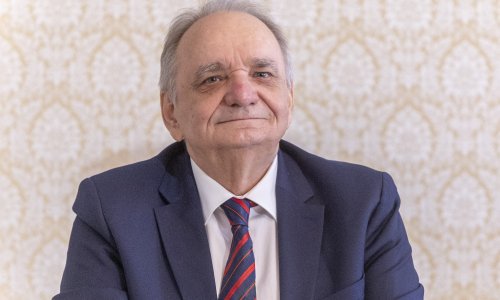
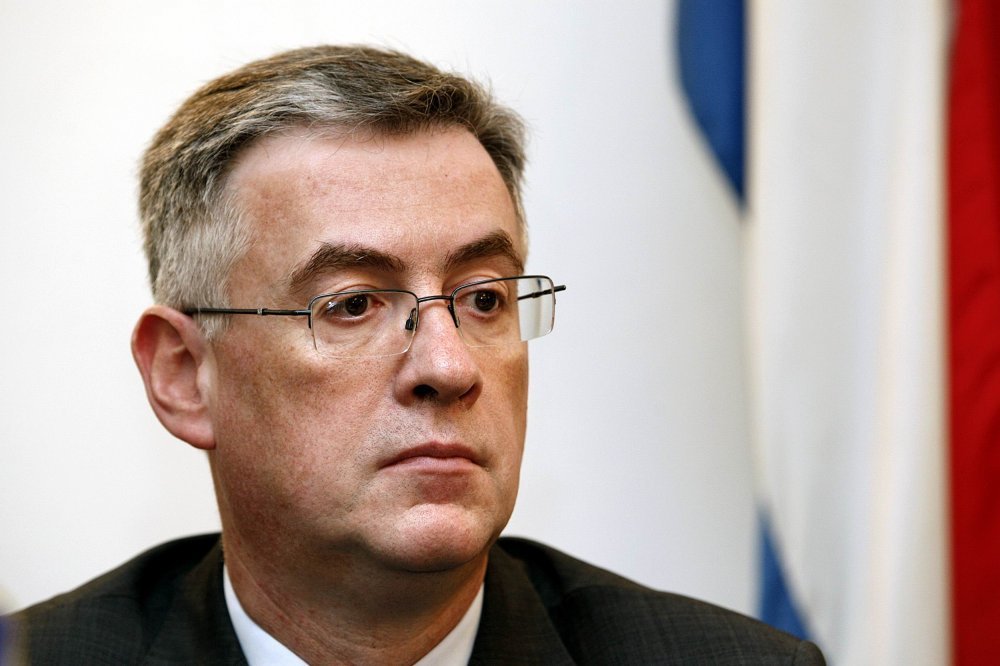

Croatian Supreme Court President Branko Hrvatin said on Monday that he had informed the authorities of a conversation with a person which he found inappropriate because it was about the case of Branimir Glavas, a politician convicted of war crimes in Osijek in 1991.
Without revealing the identity of the person in question, Hrvatin told Croatian Television (HTV) that no case of bribery was mentioned during that conversation.
"Considering the nature of the conversation, the time when it took place, the inquiries that I sensed in it and the very case discussed, I found it inappropriate," Hrvatin said.
Some media speculate that the person who spoke to Hrvatin is Ivan Drmic, a member of parliament from the HDSSB party, who in a statement for HTV denied having ever contacted, personally or through a third person, any Supreme Court judge or knowing in person any Supreme Court judge.
Drmic also commented on a statement issued earlier in the day by the anti-corruption agency USKOK, which said that Drmic did not report to USKOK "an attempt at extortion" or having been offered a favourable ruling of the Supreme Court in the case of Branimir Glavas in exchange for money.
The HDSSB MP said that on July 24 he came to the Osijek-Baranja County Police Department, where, acting of his own accord, he filed a report about a case of bribery.
He said that he talked with the police for more than two hours, after which he was told that he would have to repeat his statement to another "team in charge, from Zagreb". He said that he spoke with that team for more than four hours.
"Everything I said then is absolutely true, and institutions in charge could have checked it in the past three and a half weeks. Whether the said team from Zagreb was from USKOK... or the national police office for the prevention of corruption and organised crime is completely irrelevant for the further course of the investigation," said Drmic.
Branimir Glavas, who holds both Croatian and Bosnian citizenship, fled to Bosnia in May 2009, just before the Zagreb County Court found him guilty of war crimes in Osijek. The Croatian Supreme Court recently upheld the guilty verdict, sentencing him to eight years in jail.