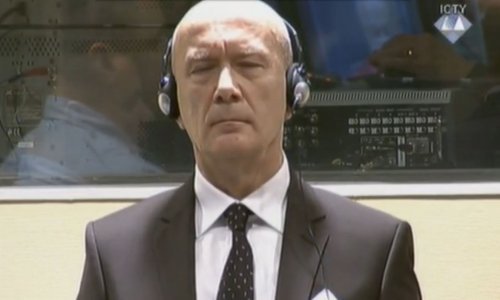
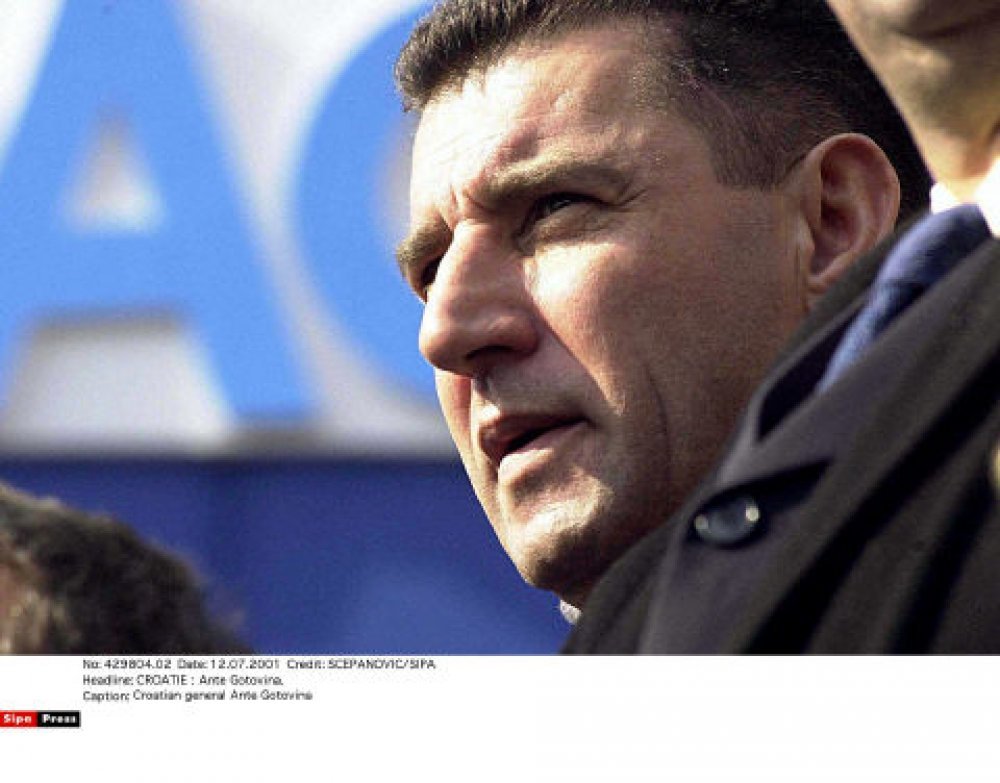

The prosecution of the International Criminal Tribunal for the former Yugoslavia (ICTY) holds that the verdict of the UN tribunal's trial chamber that sentenced Croatian Army General Ante Gotovina to 24 years provides the ground for finding him guilty of being an aider and abettor in a Joint Criminal Enterprise (JCE) and for finding him guilty on the basis of superior responsibility for war crimes committed during and in the wake of Operation Storm in August 1995.
In its brief on the alternative modes of liability for General Gotovina, the prosecution, which was required by the ICTY appeals chamber to file this submission by 10 August, said that the imprisonment of 24 years imposed by the trial chamber on the general was warranted.
According to the brief which the prosecution made public on Monday, "if the (Trial) Chamber erred in its findings on the artillery attack and Gotovina's membership in the JCE, Gotovina should be convicted of aiding and abetting persecutions, deportation, murder, wanton destruction and plunder, other inhumane acts and cruel treatment,"
"Given the grave nature of the crimes and Gotovina's role, the Prosecution submits that the same 24-year sentence would be warranted," said the prosecution in its brief after the appeals chamber requested it to elaborate its thesis on Croatian Generals Ante Gotovina's and Mladen Markac's possible guilt under the alternative modes of liability.
Considering that "additional briefing on the potential for convictions under the alternative modes of liability with respect to Gotovina and Markac would assist in a just resolution of their appeals," the UN tribunal's appeals chamber on 20 July ordered the prosecution to file by 10 August submissions in which it can explain whether it believes that the two generals might be held responsible on the basis of superior responsibility or as aiders and abettors in the event that they are not found liable for unlawful artillery attacks or are not found to be members of a joint criminal enterprise.
"While the (Trial) Chamber did not make express findings on modes of liability other than JCE, its findings (and the evidence it relied upon) establish Gotovina's liability for these crimes under aiding and abetting," said the prosecution.
The prosecution recalls that the trial chamber "found that the fear instilled by the shelling attack during Operation Storm was the primary and direct cause of the mass flight of more than 20,000 Serb civilians" from the areas held by rebel Serbs until the August 1995 Operation Storm when Croatia's forces liberated the country's southern and central regions that had been under the control of rebel Serbs since 1991.
The prosecution claims that the then Croatian President, Franjo Tudjman, and other senior officials "shared an intent to drive the Serb civilians out of the Krajina" and that they used the Croatian Army and the Special Police "to implement their criminal objective through Storm".
The prosecution accuses General Gotovina of knowing that "the intent behind the attack was to force the Serbs out".
"Nonetheless, Gotovina participated in planning the shelling attack and specifically ordered the HV (Croatian Army) assault on the towns," the prosecution said in its brief.
In its 30-page brief, the prosecution also accused Gotovina of aiding and abetting "further crimes of murder, inhumane acts, cruel treatment, destruction, plunder, and persecutions, by ordering his subordinates into the Krajina after the initial attack knowing they would probably commit such crimes and creating a permissive environment that encouraged their commission."
"Gotovina's guilt for aiding and abetting these crimes does not depend on the categorisation of the artillery attack nor on Gotovina's membership in the JCE," said the prosecution, which also insists that "in failing to prevent or punish these crimes, he is also responsible."