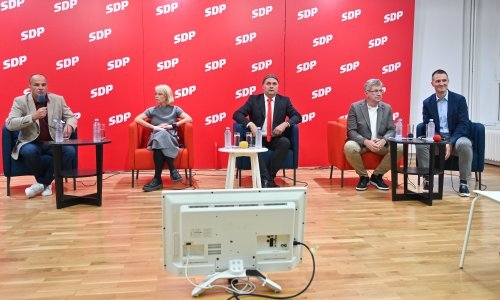

The government is not considering a possibility of extending the working age in Croatia as such a measure is appropriate for countries with a low unemployment rate, and we are far from that, Labour and Pension System Minister Mirando Mrsic said at the beginning of a conference on a fair and sustainable pension system.
Croatia currently has 330,000 jobless people, of whom 130,000 are young. Until it starts creating new jobs and cuts unemployment, the extension of the working-age ceiling is not an option, at least not in the near future, the minister said.
Mrsic said that a pension scheme reform had been launched some ten years ago, however, a political decision suspended it in 2003 and the reform has been on hold since then.
Currently, the Croatian pension system is safe and stable but the question is how much it is sustainable in the long run. We have a mere 18 percent of pension recipients who have retired at the age of 65 and with 40 years in service, against 27 percent of disability pension recipients.
This March, there were 1,450,000 pension insurance policy holders and 1,215,000 pension recipients so that the ratio of insured people to pensioners is 1.19 to 1, which is the lowest ratio in Croatian history. In addition, the expenditures of the pension system increased to three billion kuna monthly, the minister said.
Pensions in Croatia have been decreasing in recent years as a result of the eight-year-long "hibernation" in the pension reform, and pensions will continue falling if nothing is changed, a World Bank expert, Zoran Anusic, told the conference.
He recommended a rise in the contribution rate in the second pension pillar to 10 percent and the increase in the retirement age to 67 years by 2030.
Economic expert Daniel Nestic warned against sending a surplus of public administration employees into early-age retirement and recommended the discouragement of early age retirement in general.