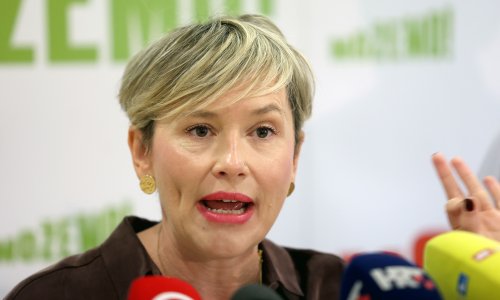

Croatia's austerity budget for 2012 should help the government maintain the country's credit rating and take on new borrowing abroad, Finance Minister Slavko Linic said in an interview with Reuters published earlier this week.
"The government has done everything to show the rating agencies that changes are coming, that it is ready to implement reforms and cut expenditures while taking part in boosting investments," Linic told Reuters.
According to the minister, the cabinet led by Prime Minister Zoran Milanovic does not need a formal arrangement with the IMF to boost its credibility this year.
"We do not have big obligations and can still finance our deficit on the financial markets. Unfortunately, we are perceived as risky and the interest rate is high. That is a problem we need to solve and it will depend on how successful we are with reforms."
Linic said there was "no room for further spending cuts this year but the government would press on with an overhaul of the public sector, particularly state-owned companies, which may include layoffs".
"This is something we cannot postpone for 2013. Those companies must run a rational business ... The private sector has gone through that in the past two years and we in the public sector have no right to behave differently," the minister was quoted as saying.
According to Linic, the government expects another two billion kuna from privatisation, and he confirmed that "up for sale would be the leading local insurer, Croatia Osiguranje, Hrvatska Postanska Banka and smaller state assets and holdings in private companies."
Croatia's accession to the European Union is scheduled for July 2013 and Linic was quoted as saying that joining the euro zone, which it is obliged to do at some stage, was a long way off.
"When you look at our pension, health, welfare reforms, we are far away from the euro zone because reforms have been slow... Our aim is to implement that and move towards the euro zone, but it will be a long period," he said.
In the opinion of analysts and pundits, Croatia could join the euro zone around the end of this decade.