
Croatian President Ivo Josipovic on Saturday expressed hope that the "refreshment" of the government announced by Prime Minister Jadranka Kosor would boost its efficiency.
"If the Prime Minister says that it is necessary, then it definitely is. The Prime Minister is the person deciding about it and I hope that, if the reshuffle takes place, it will be stimulating for the government," Josipovic told reporters when asked if the government needed "refreshment".
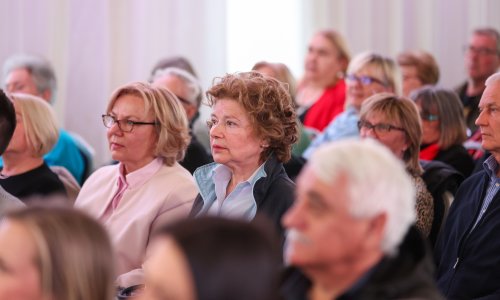
Josipovic was talking to reporters after a regular meeting with members of the public in his office.
Commenting on the offer of the Hungarian oil and gas company MOL to the small shareholders in INA to sell their stakes to MOL, Josipovic said that there was nothing disputable about it because it was in line with market competition rules.
"One should nevertheless see if there is strategic interest on the government's part and if it should attempt one day to become the majority owner of INA. But this is market competition and its rules are clear."
Speaking of the floods which have again hit the southern town of Metkovic, which lies on the Neretva River, Josipovic said that a lot more could have been done to prevent them.
Asked about the new law on the national broadcaster HRT that was adopted on Friday, Josipovic said that he had not studied it yet, but that he considered it to be a "reasonable compromise".
"I hope that it will really enable the HRT to fully perform its tasks as a public service as well as make it possible for commercial TV stations to create conditions for their survival on the market. I believe, in principle, that the law is a compromise solution."
Josipovic was also asked to comment on his address at a symposium organised by the Croatian Association for Criminal Sciences and Practice in Opatija on Friday, in which he spoke about privatisation-related crime.
He reiterated that the latest report by the Office of the Chief State Prosecutor showed that the number of cases of privatisation-related crime was three times higher than in 2005.
"There is a lot of work in that area and I believe that it is of the utmost importance to prosecute at least the most serious cases of privatisation plunder," he said.
Commenting in that context on the work of the State Audit Office, Josipovic said the Office had done "what it had been told to do", but that it had not pressed any criminal charges which he said it had the obligation to do under the Criminal Procedure Act.
By 2004, the State Audit Office had audited a half of all privatised companies and then the parliament, for reasons that are not clear, annulled the law on the audit of ownership transformation and privatisation, Josipovic said.