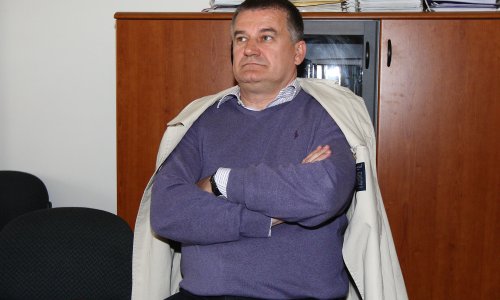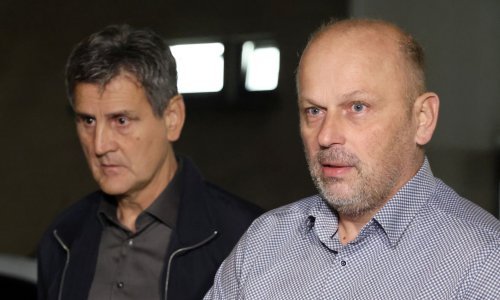


The head of the governing body of the Instrument for Pre-Accession Assistance (IPA) Hungary-Croatia cross-border cooperation programme, Simo Balazs, and Croatian Mine Action Centre head Zdravko Modrusan signed in the eastern Croatian city of Osijek on Wednesday a 3.5 million euro agreement awarding EU funding for a project to remove mines from the Croatian-Hungarian border.
The project, entitled "Revival of Mine-Infested Areas in the Danube and Drava Regions", is financed by the EU within the IPA programme for cross-border cooperation between Hungary and Croatia.
Presenting the project at a news conference, Balazs and Modrusan said that de-mining borders was an important precondition for using natural resources and the safe transit of people and goods.
Osijek-Baranja County head Vladimir Sisljagic, who attended the news conference, said 1.8 million euros would be spent for de-mining in the areas of the county bordering on Hungary. Around 1.5 square kilometres on the Croatian side of the border will be de-mined. On the Hungarian side of the border, potentially mine-infested areas will first be identified, after which mine removal will begin, he said.
Mines continue to pose a great threat in the county in which there are 140 square kilometres of mine-suspected territory, Sisljagic said, adding that 38 people had been killed in the county in mine-related accidents. In Kopacki Rit alone, which is the richest European eco-sytem, 37 square kilometres of land are still mine-infested, said Sisljagic.
The head of the Hungarian province of Baranya, Zoltan Horvath, told the press conference that he was glad that the two partner countries had managed to meet difficult EU tender criteria and secure money for de-mining the border area. The two friendly countries will continue developing all forms of cooperation in the EU, which Croatia will soon join, Horvath said.
The head of the European Union Delegation in Croatia, Paul Vandoren, said that 12 counties in Croatia were still threatened by mines. For Croatia to be completely free of mines by 2019, considerable financial resources must be secured, Vandoren said, calling on international donors to continue with their help.
He added that in 2012, another EU-funded mine removal project, worth four million euros, would start in Vukovar-Srijem and Osijek-Baranja counties. In the last ten years, the EU invested 17 million euros in mine removal in Croatia, Vandoren recalled.
Prime Minister Jadranka Kosor's envoy at today's signing ceremony, Minister of the Interior Tomislav Karamarko, said the EU had invested significant funds in mine removal in Croatia so far, as had the Croatian government, which he said had secured 62 percent of funds for mine removal. De-mining the border area will facilitate trade as well as border control and crime prevention, said Karamarko.
Djurdja Adlesic, head of the foundation Croatia Without Mines, who represented President Ivo Josipovic at the signing ceremony, said that mines left over from the 1991-1995 war had obstructed freedom of movement and farming for the last 20 years. She expressed satisfaction that the agreement would facilitate communication between the two countries and their cooperation in matters of common interest.
Asked by reporters how come there were mine-infested areas on the Hungarian side of the Croatian-Hungarian border, Mine Action Centre head Modrusan said that in 1991 Croatian Serb rebels in the region of Baranja mined the area for fear that the Croatian army or police could enter Baranja from Hungary.