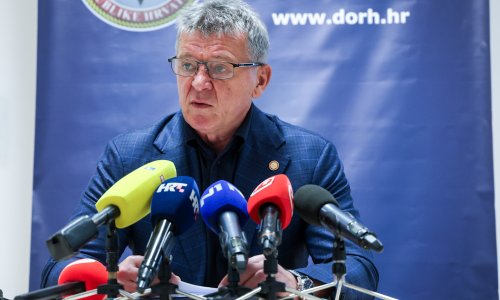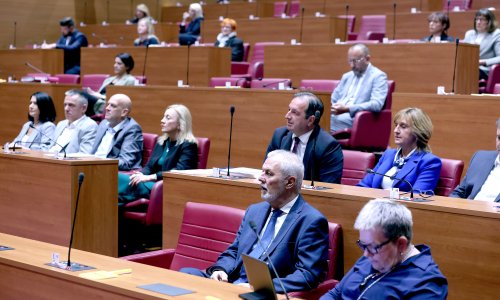
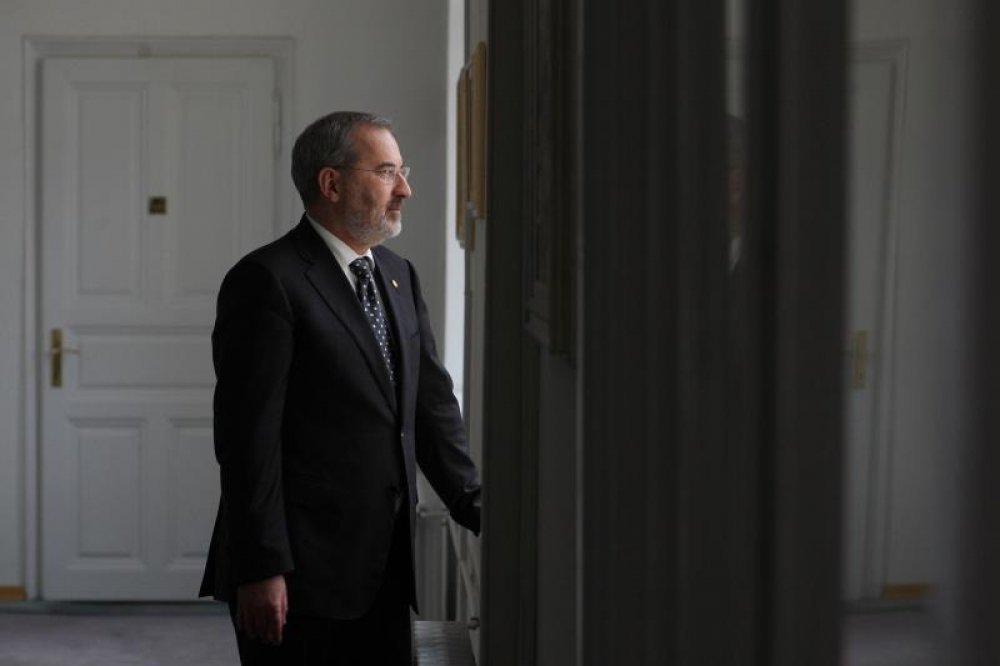

Leakage of information about investigations threatens human rights and the entire criminal process, Chief State Prosecutor Mladen Bajic said on Tuesday while submitting a report on the work of state prosecutors' offices in 2010 to the parliamentary Human Rights Committee, which endorsed it unanimously.
"If anyone is frustrated and appalled by information leakage it is us, state prosecutors and USKOK (the Office for the Prevention of Corruption and Organised Crime), although a portion of the public has a different perception," Bajic said.
Answering questions from Committee members, Bajic said that there is no leakage of information at the stage of evidence gathering, but that problems may arise after an order for investigation is issued, when all documents are submitted to the parties concerned.
"In a major case which was of special interest to the Croatian public, and I won't say which one, after an order for investigation was issued, 24 teams of attorneys had a full file with all documents, transcripts and recordings," Bajic said.
He said that information leakage primarily harmed the investigations in question, because after the information became public, some of the witnesses would not speak to USKOK investigators any more. "If we were doing that, we would be cutting off the branch we're sitting on," he noted.
Bajic stressed that Croatian media, especially print media and web portals, never carried facsimiles of documents, but only related them, which made it difficult to identify the source. He said that the state prosecutors were thinking of ways of preventing information leakage, including by assigning documents special designations.
Bajic said he expected that his office, in cooperation with a non-governmental organisation dealing with women who were raped during the 1991-1995 war, and in cooperation with the Hague tribunal and prosecutors in Serbia, would obtain necessary information to identify and prosecute war criminals.
The Office of the Chief State Prosecutor (DORH) has found that 5,998 people were killed as victims of war crimes, 2,266 were seriously injured, 2,354 were subjected to torture, ill-treatment and inhumane treatment, and 67 were raped. Most of the rape cases have been processed and resulted in an indictment relating to Serb-run detention camps, Bajic said.
He agreed with Committee members that the number of 28 deputy directors of USKOK was too small given the volume of work, adding that not many people were interested in that kind of work because it was hard and required a 16-hour work day.
Citing statistics, Bajic said that 25 aggravated murders and 32 murders had been committed in 2010, as well as 11 attempted aggravated murders and 127 attempted murders.
"Considering the number of inhabitants, this is one of the lowest percentages in relation to EU countries," Bajic said.