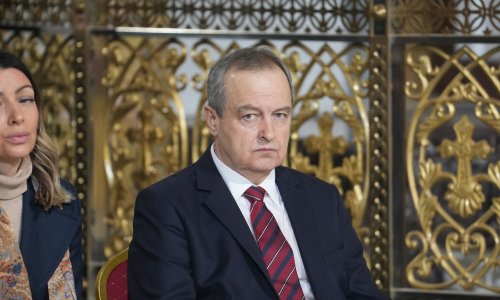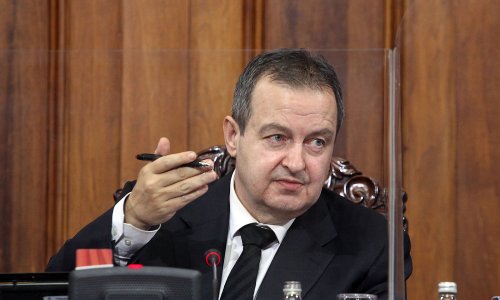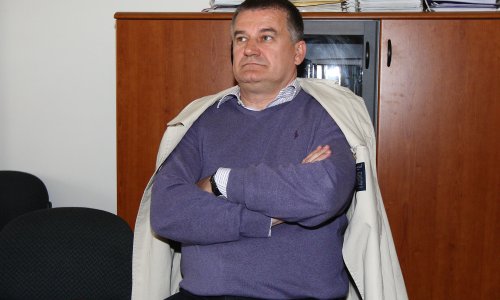
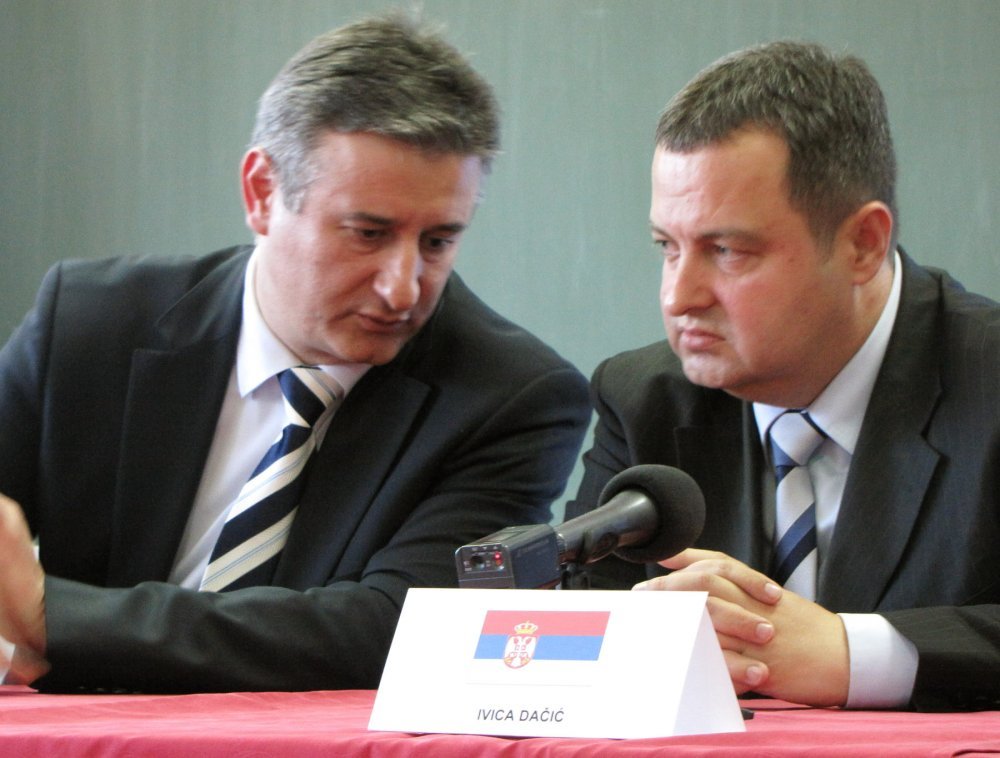

The ministers of the interior of Croatia and Serbia, Tomislav Karamarko and Ivica Dacic respectively, said on Monday that Sretko Kalinic, a member of a criminal gang known as the Zemun clan sentenced in Serbia for involvement in the assassination of Serbian Prime Minister Zoran Djindjic, could be extradited from Croatia to Serbia in the next four months.
Speaking to reporters after talks in Sombor, in the northern Serbian province of Vojvodina, the two ministers said that Kalinic's extradition would be possible after the two countries signed an agreement on the extradition of their nationals charged with organised crime and corruption, which was expected to happen in Belgrade on Tuesday.
Karamarko said that Croatian police were investigating if Kalinic and another member of the Zemun clan, Milos Simovic, who wounded Kalinic in Zagreb in early June, had had helpers while in hiding in Croatia, underlining that there were elements indicating that they had had helpers.
"We rid our cooperation of political influence a long ago, our cooperation is very pragmatic, it is in the service of our citizens' security. We have no alternative, we must beat crime in the region, it is a common problem that threatens the entire region," Karamarko said, adding that Kalinic was in a prison infirmary in Zagreb because he forged his documents and that his condition was stable.
Serbia's Minister of the Interior Ivica Dacic said that he expected Kalinic's and Simovic's statements to provide new information on more than 20 of the gravest unresolved crimes, most of which were committed in Serbia, as well as in other former Yugoslav countries and all over Europe.
"We believe it is important that he is able to give statements as soon as possible and to cooperate with the police and the prosecution so that those crimes could be solved," Dacic said.
Karamarko and Dacic discussed at their meeting in Sombor efforts to step up the establishment of a regional centre to combat organised crime, which they hoped would be joined by other countries in the region.
Karamarko said the centre was already operating in a way and that now it should be "institutionalised". "The quality of our cooperation is a message of strength, a message that along with previous operations and the ones to come we expect to clamp down strongly on the underworld and organised mob groups," said Karamarko.
Dacic said that cooperation through the regional centre combating organised crime was expected to cover all areas where criminals from countries in the region could be hiding, and that all countries should have the same goal - fighting against organised crime and terrorism, as well as against financial crimes.
Speaking of Sunday's terrorist attack on the police station in the central Bosnian town of Bugojno, the two ministers said the incident pointed to the threat of Wahhabism that should not be underestimated, and to the need for countries in the region to cooperate and exchange intelligence data.
The talks in Sombor were also attended by the Croatian and Serbian police directors, Oliver Grbic and Milorad Veljovic.