
The European Commission on Wednesday initiated consultations with European Union member-states to activate a safeguard clause, envisaged by Article 39 of Croatia's EU accession treaty, over Croatia's failure to align its European Arrest Warrant legislation with the acquis communautaire.
The EU countries now have 10 days to take a stand on the matter, after which sanctions on Croatia will be defined, unless Croatia brings its national legislation on the EAW in accord with the acquis in the meantime.
The views of the member states are not binding on the Commission, because under the accession treaty the Commission is responsible for activating the safeguard clause.
The Commission is proposing "enhanced monitoring and the suspension" of funds for Croatia's preparations for entry into the Schengen passport-free area.
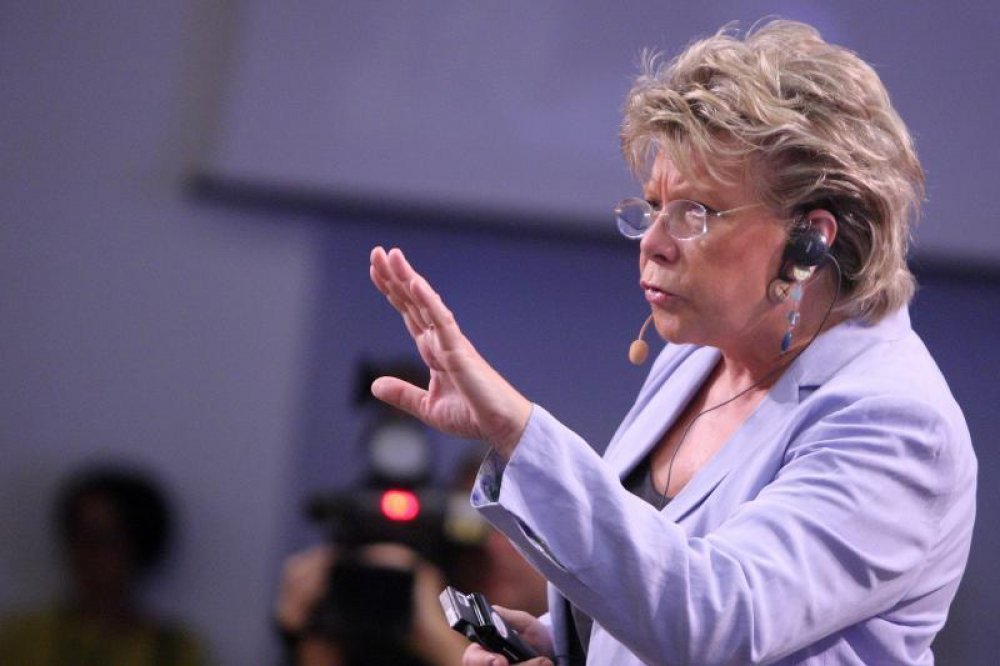
When asked what the "enhanced monitoring" meant, Mina Andreeva, spokeswoman for Justice Commissioner Viviane Reding, said it was one of the options being proposed and that a final decision would be made after consultations with the member states.
Enhanced monitoring means that Croatia may be requested to report on the implementation of laws in the area of justice and home affairs or on the use of EU funds. But a final decision has not been taken yet and I cannot be more specific, Andreeva said, avoiding to say whether it would be a post-accession monitoring mechanism similar to the one used in the cases of Bulgaria and Romania.
As for the proposed suspension of EU funding from the Schengen facility, Croatia has already received EUR 40 million this year, while the 80 million earmarked for next year could be suspended.
The Commission said in a statement it had decided on this move after repeated warnings and exchanges of letters with the Croatian authorities during the summer. "The Commission has consistently requested a swift and unconditional correction of the Croatian legislation implementing the European Arrest Warrant to bring it back in line with the EU-acquis. This had been the commitment of the Croatian authorities during the accession negotiations."
"Whilst Croatia has offered to return its law to legality it set as a condition its entry into force on 15 July 2014. This long delay is unjustified. In June 2013 it had taken Croatia only a few days - just three days prior to Croatia's EU accession - to change its legislation in a manner which contradicts the European Arrest Warrant. Returning it back to conformity should not take longer," the statement said.
Last Friday Justice Commissioner Reding, Commission President Jose Manuel Barroso and Enlargement Commissioner Stefan Fuele informed the College of Commissioners about the situation with Croatia and received their full support for activating the Article 39 procedure.
Commission spokeswoman Pia Ahrendkilde Hansen said on Wednesday that the matter had not been discussed at today's meeting because there was no need for it, but that the College took note of what Reding had announced in recent days.
Article 39 allows the European Commission to undertake appropriate measures, within three years of a country's EU accession, at the request of a member country or on its own, and to define the terms and ways of enforcing such measures in the event of serious shortcomings in the transposition or implementation of EU legislation. The measures are not applied longer than necessary and are lifted when the shortcomings have been corrected.
vezane vijesti
-
![Za jedne mrski nalogodavci političkih ubojstava, a za druge organizatori obrane i obavještajci zaslužni za opstanak države: Tko su zapravo Perković i Mustač?]()
Za jedne mrski nalogodavci političkih ubojstava, a za druge organizatori obrane i obavještajci zaslužni za opstanak države: Tko su zapravo Perković i Mustač?
-
![Ministar Grlić Radman oštro uzvratio: To je čista obmana, Milanović ne govori istinu]()
Ministar Grlić Radman oštro uzvratio: To je čista obmana, Milanović ne govori istinu
-
![[VIDEO] Milanović: Svakome tko kaže da Đurđević ima veze s Lex Perković kazat ću da je lažov. Ako je moguće tako lagati, ja ću govoriti da je HDZ lopovska stranka]()
[VIDEO] Milanović: Svakome tko kaže da Đurđević ima veze s Lex Perković kazat ću da je lažov. Ako je moguće tako lagati, ja ću govoriti da je HDZ lopovska stranka
![[VIDEO] Milanović: Svakome tko kaže da Đurđević ima veze s Lex Perković kazat ću da je lažov. Ako je moguće tako lagati, ja ću govoriti da je HDZ lopovska stranka](/media/thumbnail/500x300/1458260.jpeg?cropId=0)