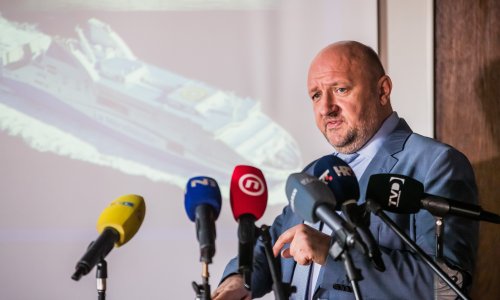
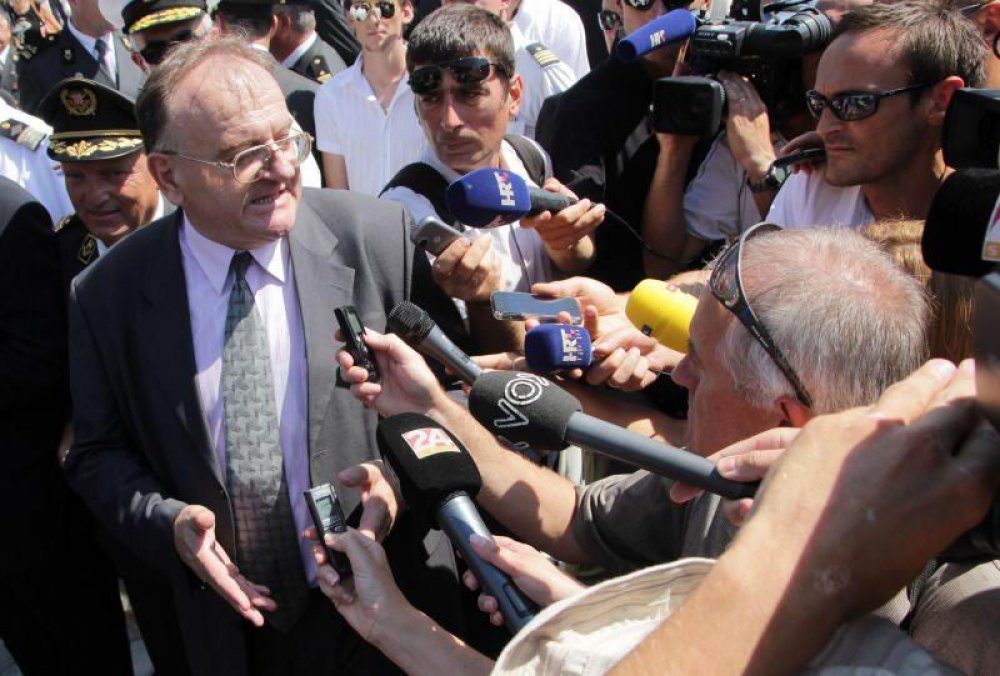

The Serb Democratic Forum (SDF) president Veljko Dzakula, who on Sunday attended Croatia's celebrations of Victory Day and the 17th anniversary of Operation Storm in Knin, has said that he could not have turned down the invitation by Croatian President Ivo Josipovic whom he has praised for pursuing a totally new policy towards the Serbs in Croatia.
Dzakula, portrayed as the first ethnic Serb leader at the Knin ceremonies in memory of August 1995 Operation Storm in which Croatia liberated its central and southern areas held by rebel Serbs since 1990, told the Belgrade-based "Politika" daily on Tuesday that time should show if his act was "conciliatory or traitorous".
Politika reports that Dzakula's arrival in Knin this past Sunday stirred "a big political storm" in Croatia and also among Serbs in Croatia and among Serbs who left Croatia for Serbia.
Dzakula was quoted as saying that he supported President Josipovic's policy aimed at the real fence-mending between the Serbs and the Croats.
He said he was aware that his arrival for the Knin celebrations of the Operation Storm anniversary would stir strong reactions and criticism from all sides.
"Everyone sticks to their positions that they were right and that they were victims who defended themselves and that only the other side committed crimes. No one accepts the responsibility for their own crimes. No one extends the hand of conciliation, no one launches process to come to terms with their own past," Dzakula said adding that therefore "any move aimed at the normalisation of the relations is not well accepted in the public".
"Such pioneering moves encounter the lack of understanding from the majority, but a better future for us and our children can't wait for the blind to get back their sight," Dzakula said.
He said that he did not pretend to be a conciliator, but that he was a man who clearly speaks out about the outstanding problems of Serb refuges.
In his opinion, Serbia and Croatia will never have the same opinion on Operation Storm. This operation will be always viewed by the Serbs as crime and their exodus, and Croatians will treat it always as their great victory, according to the SDF leader.
"That victory has a bitter taste due to its consequences and crimes committed during and in the wake of Operation Storm. The (Croatian) Serbs must admit that they were pushed into a hopeless situation due to the wrong and irresponsible policy of its leadership and of Serbia's leadership, too, and that they were sacrificed just as today they are manipulated and kept hostage to their past by those who want to score political points in that way."
Asked to comment on criticism from Croatian Homeland Defence War veterans' associations that his arrival in Knin had been given much more attention than the importance of Croatia's defenders, Dzakula said that "this privileged group is never pleased with their own status".
Croatia celebrates Victory and Homeland Thanksgiving Day and Homeland War Veterans' Day on 5 August in memory of 5 August 1995 when it regained control of the town of Knin and most of its territory occupied by rebel Serbs in 1990.
The military offensive codenamed Operation Storm began at 5 AM on 4 August 1995 and put an end to the five-year-long occupation of central and southern Croatia. The Serb insurgency, backed by the Yugoslav People's Army, started in the summer of 1990 with roadblocks which over time turned into attacks on Croatian towns and villages and killings and expulsions of non-Serbs.
Operation Storm marked the end of the war in Croatia, laid the ground for the peaceful reintegration of the Danube Region in the east, spared Bosnia's Bihac from the fate of Srebrenica, and enabled the return of refugees and displaced people.