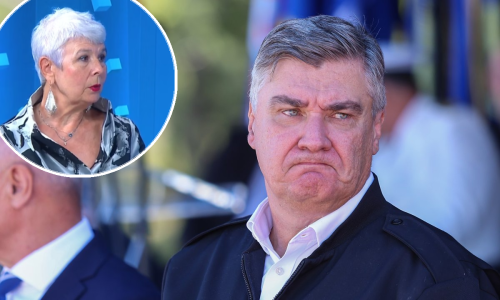

Prime Minister Jadranka Kosor on Saturday thanked Croatian negotiators and citizens and European Union officials for their contribution to the completion of Croatia's EU accession negotiations, announcing further reforms and the preparation of an accession treaty.
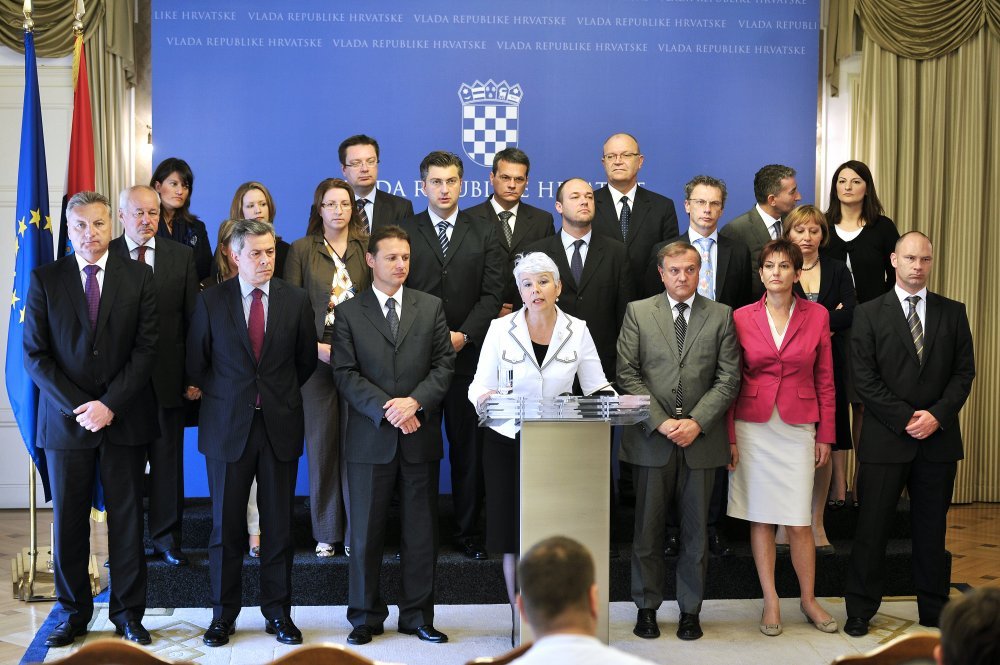
Kosor met with the heads of negotiating groups in the Cabinet office on Saturday after the European Commission recommended to the Council of the EU on Friday to close the negotiations in the last four chapters, which paves the way for Croatia to join the Union on 1 July 2013 if the Council accepts the proposed date.
"Those people worked with dedication and responsibility so that the Commission would say 'as far as we are concerned, Croatia has done its part of the work,'" Kosor told a press conference.
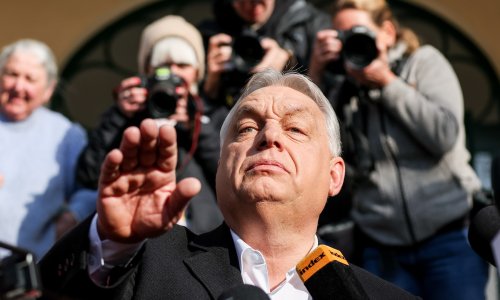
Kosor thanked citizens and war veterans for their trust, adding that "without their love for Croatia, today we wouldn't have been on the road to completing the negotiations." She also thanked EU officials -- Commission President Jose Manuel Barroso, Enlargement Commissioner Stefan Fuele, Justice Commissioner Viviane Reding, the Hungarian EU Presidency and Hungarian Prime Minister Viktor Orban for their assistance and support.
"I am awaiting the decision of the Council of the EU with confidence and we are proceeding to prepare an accession treaty," the prime minister said.
Kosor said she thought the toughest part in the accession process was Slovenia's blockade in 2009, which was removed thanks to her agreement with Slovenian Prime Minister Boris Pahor.
"When we had demonstrated European behaviour in dealing with problems, we opened the door to the continuation of negotiations," Kosor said, mentioning other unfavourable circumstances on Croatia's path to EU membership, such as enlargement fatigue, problems relating to the Lisbon Treaty and the global economic crisis.
Among the biggest achievements in the negotiations Kosor cited the fact that Croatian would be the 24th official language of the EU, protection of traditional fishing practices, and that in the first year of membership farmers would be allowed to use grants in their full amount.
Kosor said that the negotiations had not been easy. She said that Zagreb was the first to have been given benchmarks for closing and opening negotiations, noting that officially there were 180 such benchmarks, while their actual number exceeded 400.
Croatia is the first country to have negotiated in 35 chapters, it was the only country that had had Chapter 23 - Judiciary and Fundamental Rights, and it is the first country to be entering the EU alone, after Greece which joined in 1981, Kosor said, adding that the negotiating process had also been burdened by the difficult legacy of the 1991-1995 war.
Kosor also mentioned numerous "brakesmen and pointsmen" who had made the negotiating process difficult for the government. "There were many brakesmen, who put on the breaks when we were driving uphill, and pointsmen who tried to send us on the wrong track."
Kosor thanked President Ivo Josipovic, her coalition partners and non-governmental organisations for their congratulations, and said that the fact that Social Democratic Party (SDP) president Zoran Milanovic did not make a public statement following the news from Brussels could have been expected.
Responding to questions from the press, Kosor would not comment on the announcement by her coalition partner, the president of the Croatian Peasant Party (HSS) Josip Friscic, that the HSS would be running in the forthcoming parliamentary elections on its own.