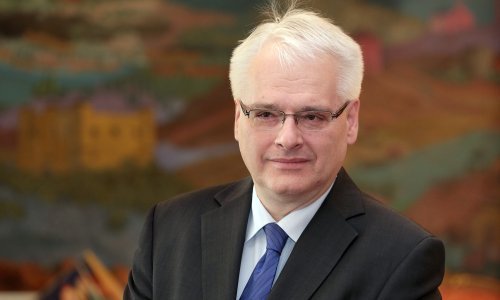
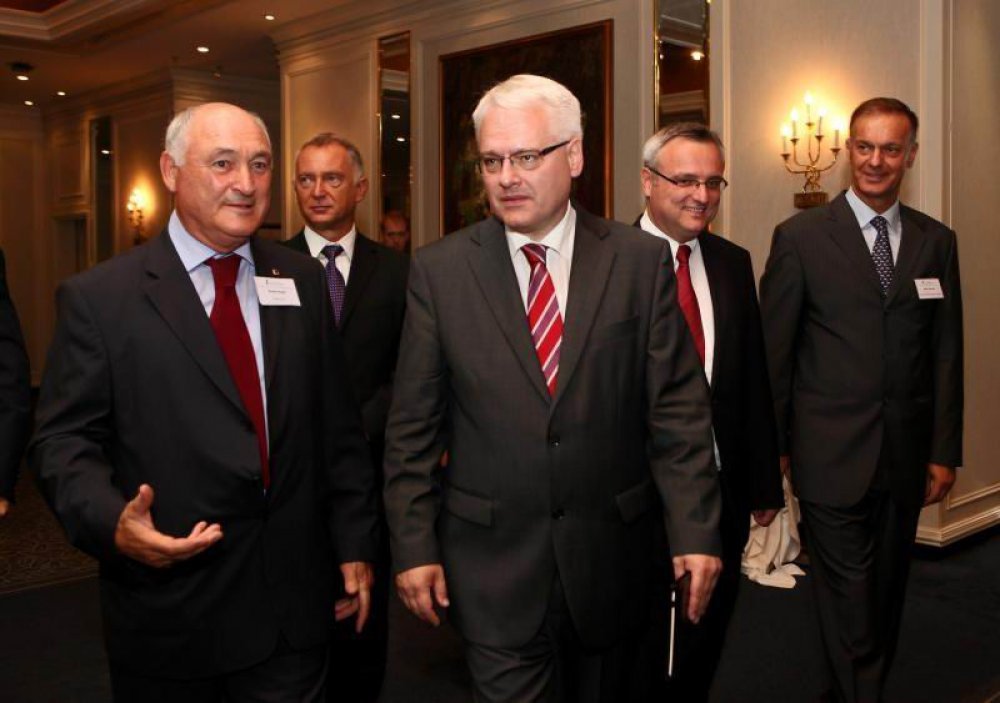

President Ivo Josipovic on Tuesday spoke of the idea of expanding presidential powers, saying that it was not his wish to gain more power, but to strengthen the position of citizens and parliamentary democracy.
Speaking in an interview with the Media Servis broadcaster, Josipovic said that now was not the time to talk about changing the Constitution, but that the idea merited consideration.
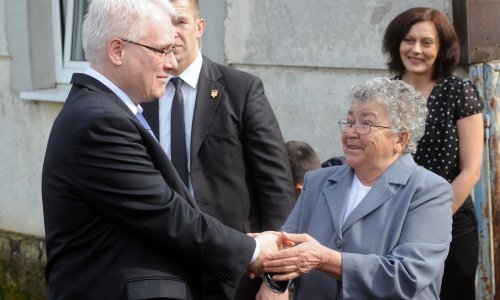
He said that every day he received complaints from citizens about the work of state institutions, adding that some institutions ignore requests from citizens despite their constitutional obligation to respond to them.
"My wish is to ensure a stronger position for citizens who feel that they are not treated as they should be by state institutions. I am not in favour of stronger powers for the President in terms of his original powers but stronger presidential powers in protecting citizens," the President said.
Josipovic said that some of the laws the President must sign under the Constitution are unconstitutional or harmful. "I think it would be appropriate not to assume the powers of Parliament and the Government in such cases, but to have an option to send such laws back to Parliament for further consideration."
Josipovic said that if such a mechanism existed today he would return the bill to invalidate the legal acts of the former Yugoslavia and Serbia relating to the 1991-1995 Homeland War if it were sent to him in its present form.
He said that this was not an urgent matter and that it might be wrong to bring it up in the pre-election time. "This topic will be discussed when and if the Constitution is to be changed."
When asked how he would solve the problem of Serbian indictments against Croatian veterans since he did not support the government-sponsored bill to declare such documents null and void, Josipovic said he supported the government's declaration which proposed signing an international treaty with Serbia, rather than "waste time" on the bill. "I'm ready to assist with it and I think it's the right way," he said.
When asked how he planned to settle border disputes with Serbia, Josipovic said that the only way to do it was to refer them to arbitration or the International Court of Justice. "If it's not be possible to find a suitable solution or a compromise in the interests of both parties, international law has appropriate mechanisms and we should use them," he added.