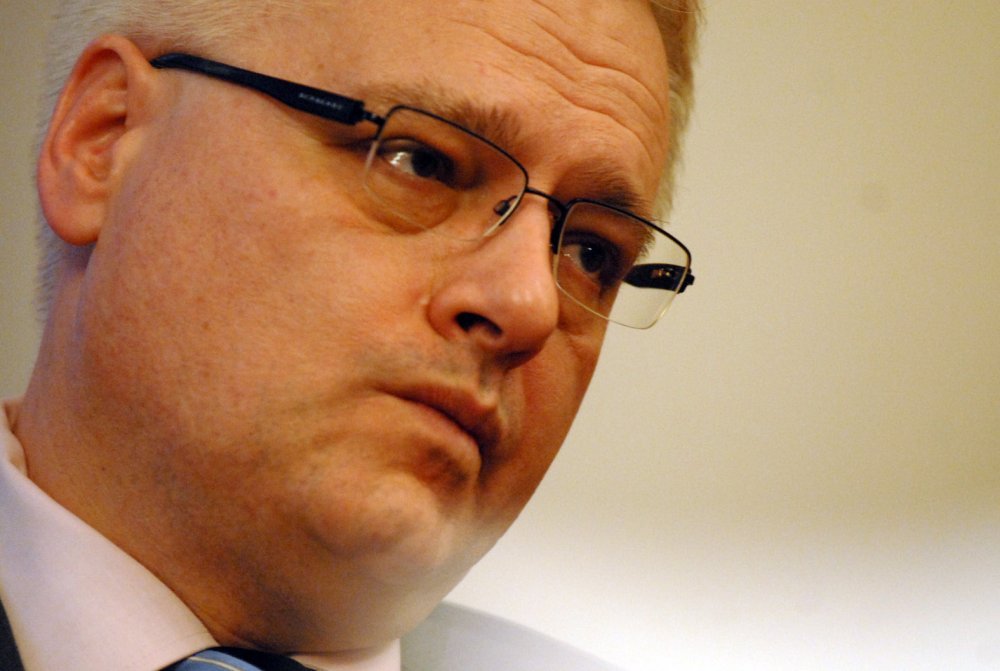

Speaking of the situation in Vukovar regarding dual Latin and Cyrillic signs on public institutions in the town, President Ivo Josipovic on Monday reiterated the importance of reaching a consensus on the treatment of ethnic minorities because otherwise that issue might boomerang in a much more serious form given that chauvinism still lingers in Croatia and in neighbouring countries.
"My idea is to open a debate in Croatian society on the fundamental issue of the rights of the ethnic minorities and on unity in the need for us to respect one other," Josipovic said in an interview with Croatian Television on Monday evening.
He said he wanted to share his idea with all the relevant factors in the country -- the government, the opposition, veterans' organisations, the people of Vukovar, minority organisations and political parties "to pave the way to a renewed, new consensus on this issue of paramount importance which is much more than the application of the Cyrillic script and Serbian language."
The President said that the dual-alphabet signs should not be removed, but that a solution should be sought through dialogue so that no one would "come out of the existing situation humiliated, defeated or offended."
In his opinion, the situation in Vukovar over the dual-alphabet signs was caused by "a critical mass of frustration that led to resistance to the implementation of the law" and so efforts should be made to renew positive political processes.
Josipovic hailed the acceptance of the idea of a joint, integrative school in Vukovar, which had been opposed by the Serb minority for years. "If we segregate children from kindergarten to school, if there are cafes for Croats and for Serbs, then there can't be any happiness there," he said, adding that a solution lay in the "yes to integration, no to assimilation" formula. He said he would discuss this matter during his forthcoming meeting with Serbian President Tomislav Nikolic.
Speaking of changes in society since 2010 when he became President, Josipovic said there was more justice now as a result of the fight against corruption and organised crime, citing indictments against high-level government officials. He said that legal action was now being prepared against high-ranking people in security services and other areas.
Commenting on the law on judicial cooperation with the EU in criminal matters, popularly dubbed Lex Perkovic, the President said he did not think that the government's attempt to ensure an equal status for Croatian citizens in the European Union was "a strategy of deception" or "an attempt to protect someone", but obviously it was not acceptable to the EU. He said that this law had not much to do with the person it was popularly named after.
Josip Perkovic is a former secret agent who is wanted by Germany for the murder of a Croatian dissident in 1983.
As regards the situation in Syria, Josipovic said that it would be best to put a stop to the bloodshed in that country in a peaceful way, and in the event of an international intervention it would be best if such intervention was based on a UN resolution.