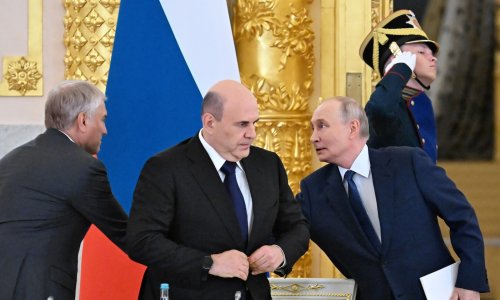
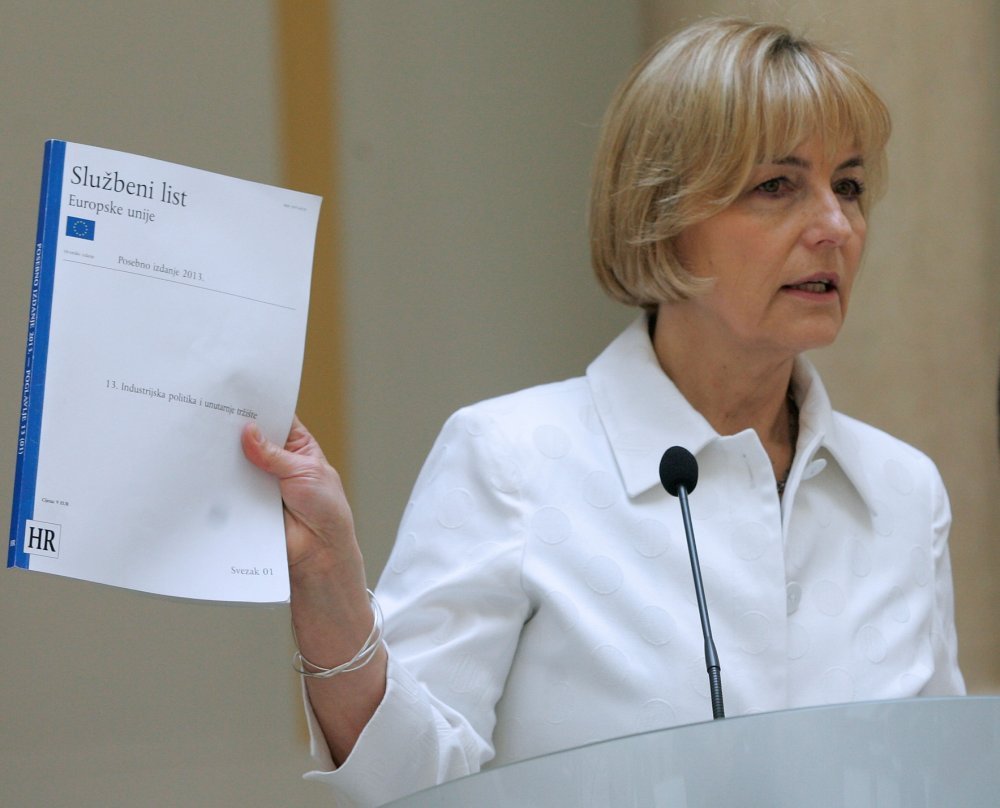

Croatian Foreign Minister Vesna Pusic has said that the proposal for ratifying an agreement on border demarcation signed in 1999 by Croatian and Bosnian Presidents Franjo Tudjman and Alija Izetbegovic is a proper topic for consensus with the strongest opposition party -- the Croatian Democratic Union (HDZ), adding that it is the HDZ that keeps calling for a consensus on the construction of the Peljesac Bridge and that it was the HDZ government that confirmed more than a year ago the temporary regime in Mali Ston Bay, as stipulated by the Tudjman-Izetbegovic deal.
Before the beginning of the government's meeting in Zagreb on Thursday, Pusic told reporters that legal experts would analyse the entire situation and see whether the ratification of the said agreement would require the support of two thirds of MPs in the national parliament.
The HDZ insists that the ratification would need a two-third majority.
If there is need for a consensus, this is the right topic. They (HDZ) have kept calling for a consensus on the (Peljesac) bridge, and we may have found the way how to secure its funding. This (ratification of the agreement) is a topic to which they can positively respond given that a year ago or two they regarded it as a normal and acceptable solution and that that regime (in the bay) is still in force," Pusic said.
Pusic answered in the affirmative when asked whether the temporary regime in place means that the two islets in Mali Ston Bay and the tip of the peninsula of Klek have been virtually under the jurisdiction of Bosnia and Herzegovina since 1999.
Asked whether she expects some problems regarding statements by the Bosnian Serb entity's leader Milorad Dodik that the Bosnian-Croatian agreement on border could not be made without consent from the Serb entity, she said it remained to be seen.
"There are various statements and situations. I believe there are sufficient rational arguments to solve the problem and for the sake of the interest of everyone to make a step forward... rather than procrastinating the unsolved situation and making things more difficult for ourselves when it comes to the rational solution of connecting Croatia's territory," she added.
According to the minister, Croatia is about to reach a good and financially feasibly solution for transport connection of the Dubrovnik area with the rest of the country.
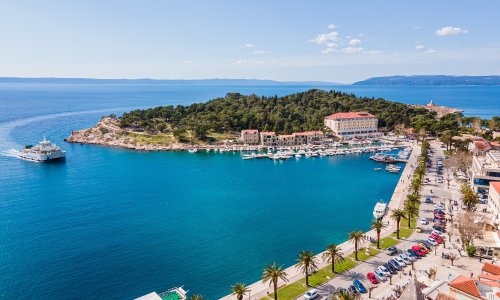
Two variants are topics of Croatia's talks with the European Commission and Bosnia and Herzegovina: a transport corridor through Neum, Bosnia's coastal stretch that cuts off the Croatian Adriatic coast, and building a bridge between the peninsula of Peljesac and the mainland.
She recalled that the EC had confirmed that the Peljesac bridge as a European project might apply for the EU funding. The next step is to prepare a high-quality plan for this project, satisfying financial, technical and other European Union standards, she added.