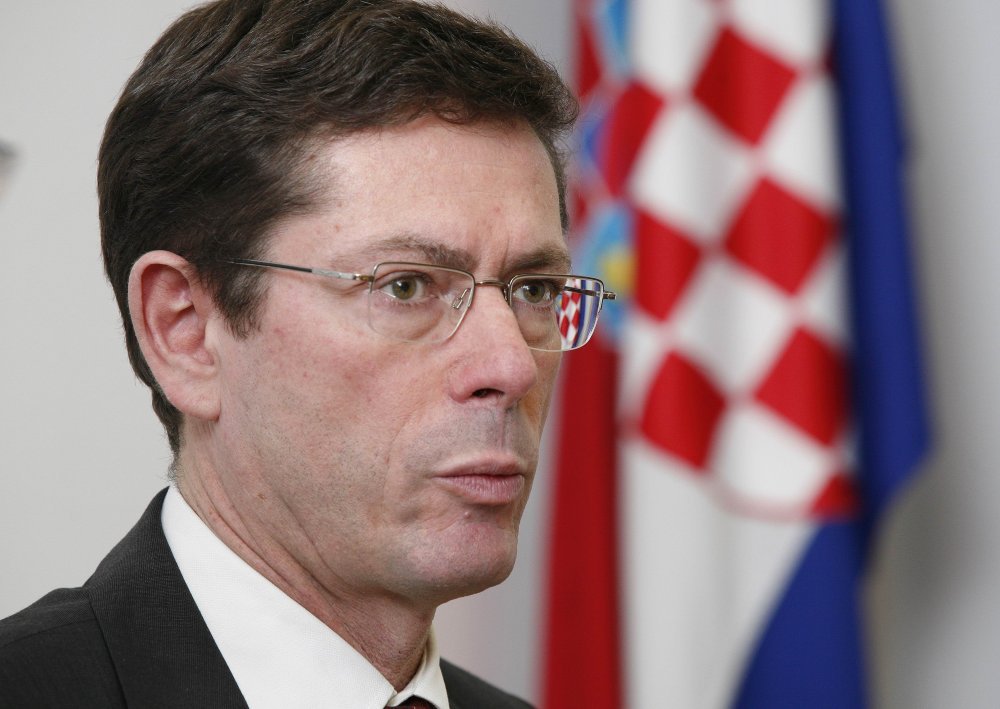

Croatia has definitely declared "an all-out war" on corruption and organised crime and is gaining ground in that war, Justice Minister Ivan Simonovic said on Wednesday.
We have the will and the capability to purge Croatia of corruptionsuccessfully," Simonovic said in a Croatian Radio programme.
Simonovic said that corruption in high places was always the most dangerous,because it was difficult to expose it, but stressed that on the political levelthere were no doubts about the need for combating corruption because both PrimeMinister Jadranka Kosor and President-elect Ivo Josipovic had defined it as thetop priority.
"Over the past year, we have launched a series of investigations,"he said, noting that the appointment of Jadranka Kosor as prime minister hadprovided fresh impetus to the fight against corruption.
Speaking of the Podravka case, Simonovic said that it was crucial to solvethat case as soon as possible, because "it's still a healthy firm and itwould be a pity to let one of the Croatian brands go to waste."
The minister said that the European Union, after burning its fingers withsome of the newly-admitted members, was insisting on very high criteria incombating corruption and organised crime. He stressed that only by tacklingcorruption in high places could lower-level corruption be contained.
Asked to comment on media reports regarding possible links between formerPrime Minister Ivo Sanader and some of the corruption scandals and the impunityof some politicians, Simonovic said: "No one can be above the law --either former or present or future presidents or prime ministers."
Asked if there were any "untouchables", the minister replied thatthere certainly "were some who were not touched physically.""There have always been untouchables, but this is the first time in thehistory of Croatia that there won't be untouchables any more."
Speaking of the opening of Chapter 23 in EU accession negotiations, whichconcerns the judiciary and fundamental rights, Simonovic said that the problemof military documents, namely artillery logbooks, wanted by the UN war crimestribunal in The Hague was a tactical issue, while the fight against corruptionwas a strategic issue.
"We will resolve the issue of artillery logbooks one way or the other.An administrative investigation was followed by a proper police investigation.Documents were handed over. It was established who, when and why prevented themfrom being in the right place," Simonovic said, adding that he thoughtthat the countries that had been blocking negotiations in Chapter 23 would soonagree to opening negotiations now that they saw that the fight againstcorruption in Croatia was "serious, sincere and relentless."
Simonovic said he was firmly convinced that Chapter 23 would be unblockedvery soon, estimating that once it was unblocked it would take about a monthbefore negotiations started.
Asked if Croatia should drop its genocide lawsuit against Serbia, Simonovicsaid that the answer "yes" or "no" would be wrong.
"What is important is the goals that we want to achieve with thatlawsuit -- Serbia should take a clear position on crimes committed in theterritory of Croatia, it should punish all those who committed war crimes,return (Croatian) cultural treasures, shed light on the fate of missingpersons, and pay damages to victims," Simonovic said, adding that thelawsuit had already produced certain results and led to some of the Croatiandemands being met.
"The question is whether that is enough for Croatia to withdraw thelawsuit. I think a lot more should be done. It would be good if Serbia took furthersteps and then we could talk about an out-of-court settlement," he said.
Speaking of motives behind Serbia's countersuit, Simonovic said it was anattempt at achieving balance.
"Constant attempts to impose balance conceal the fact that the war wasfought in the territory of Croatia, and although there were casualties on bothsides, (Serbia) ignores the ratio of casualties and the context in which theyoccurred," he said.