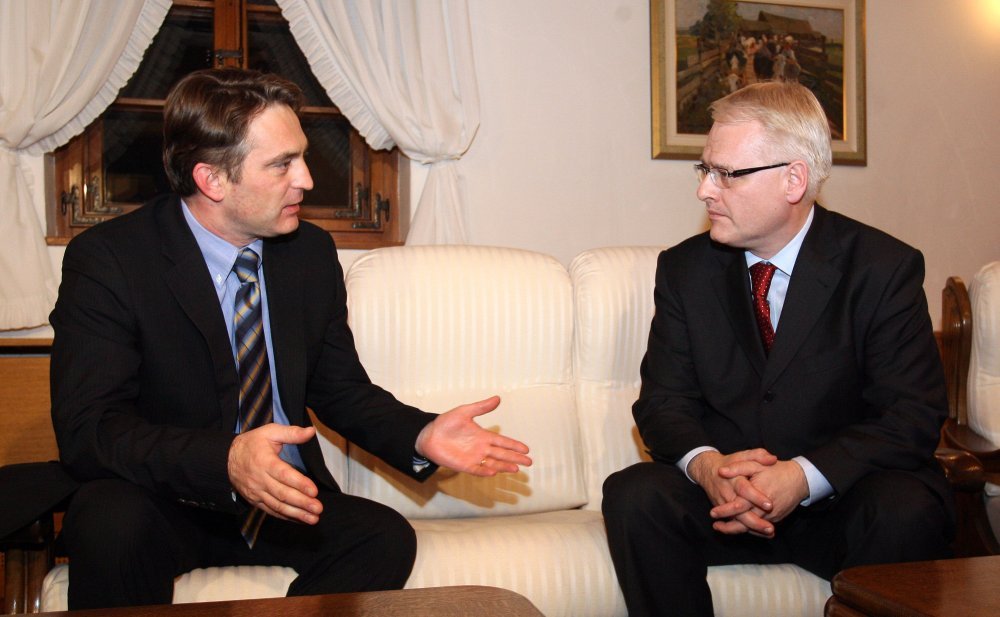

Croatian President Ivo Josipovic said on Mt Jahorina on Friday that countries of the region have a common problem -- the existing criminal infrastructure -- so it would be good to intensify a joint fight against organised crime, and confirmed that Croatia and Serbia were working on a bilateral agreement on processing war criminals.
"No one who committed a war crime can go unpunished," the Croatian president said, adding it was important to avoid politicising war crimes.
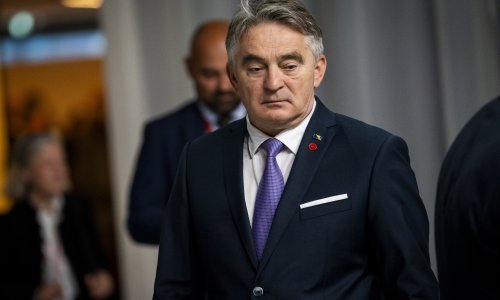
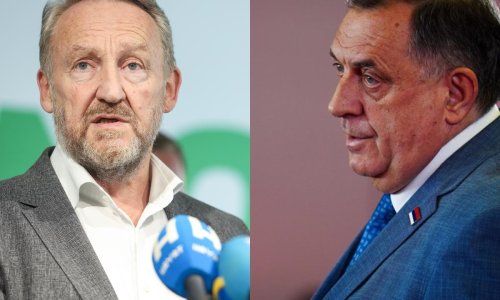
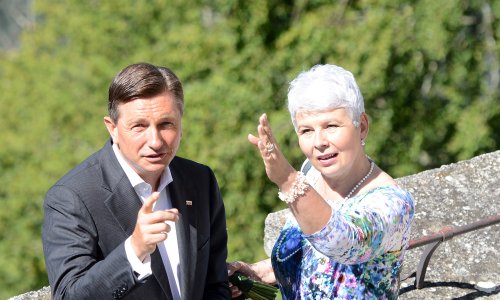
Josipovic said this at a news conference held after the second informal trilateral meeting which was also attended by Serbian President Boris Tadic and members of the collective Bosnian Presidency -- Zeljko Komsic, Bakir Izetbegovic and Nebojsa Radmanovic.
Josipovic said he and Tadic agreed it was necessary to sign a bilateral agreement which would enable prosecution of war crimes suspects in the countries in which they reside, so as to avoid cases such as that of Croatian war veteran Tihomir Purda, who had been arrested in Bosnia on a warrant issued by Belgrade.
Josipovic also said Croatia was ready to assist its neighbours on their path to the EU.
Josipovic said "no spectacular results" had been achieved since the first trilateral meeting held on the northern Adriatic archipelago of Brijuni in the summer of 2011, but added that small progress was made. He underlined progress in solving the issue of the war's missing persons, adding that the possibility to have border disputes resolved by arbitration had been opened, citing Croatia and Slovenia as an example.
According to Serbian President Tadic, something had happened since the Brijuni meeting -- the arrests of the two remaining ICTY fugitives (Ratko Mladic and Goran Hadzic).
Tadic said the rule of law had great importance, which was why he supported Josipovic's initiative, adding that Serbia wanted all war criminals to be brought to justice.
"Every legal process can reveal some new facts," Tadic said, advocating resolving the issue of the war's missing and saying that judicial bodies in Serbia were working very well on resolving those issues. He stressed Belgrade would investigate war crimes committed in detention camps in Serbia after the fall of Vukovar.
Tadic also said that countries of the region should not neglect economic cooperation either. It is necessary to discover hidden resources for internal economic development, Tadic said, adding this was particularly important also because of the challenges facing the European Union. He also talked about the completion of pan-European transport corridors and the construction of a double-track railway on Corridor X.
Addressing a reporter's question, Tadic said he disagreed with the position of the president of the Liberal Democratic Party of Serbia (LDP), Cedomir Jovanovic, that the Bosnian Serb entity was established on genocide committed in Srebrenica.
Tadic said he was prepared to meet Kosovo Prime Minister Hashim Thachi, provided the meeting "is not used to promote Kosovo's independence."
According to Zeljko Komsic, the participants in the meeting hailed the progress made in government formation in Bosnia and Herzegovina as well as the positive result of the referendum on Croatia's EU admission.
Komsic stressed the main focus of the talks, however, was the fight against organised crime, adding that they agreed the three countries must intensify cooperate in that area.
He said the participants in the meeting also agreed to intensify efforts in the organisation of sporting events and joint applications for EU funds.
"As heads of state, we will ask our governments to immediately start solving problems that have been on hold for a while," Komsic said.
He confirmed that Bosnia had reservations concerning a possible trilateral agreement on war crimes prosecution as there was no consensus within the country concerning that issue.
In my opinion, it is natural to hold a trial in the country where the crime was committed, Komsic said, adding that it was possible that Bosnia would give political powers to its State Prosecutor's Office to be able to refer some cases to other countries should it assess that these cases would have better trials in other countries.
Commenting on the position of Croats in Bosnia and Herzegovina, Komsic said it was clear that the Bosnian Constitution must be changed in order to better protect the rights of all three peoples as well as individuals.
Nebojsa Radmanovic said that without a doubt, the rights of Bosnian Croats were not sufficiently protected, adding that this would be resolved through amendments to the Constitution or the Election Act.
Bakir Izetbegovic said the best test for democracy was the position on the less numerous people.
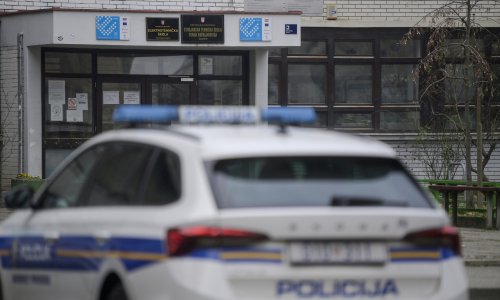
The meeting on Mt Jahorina was held under heavy police protection and tight security measures.