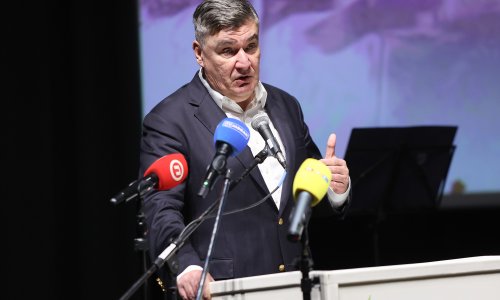
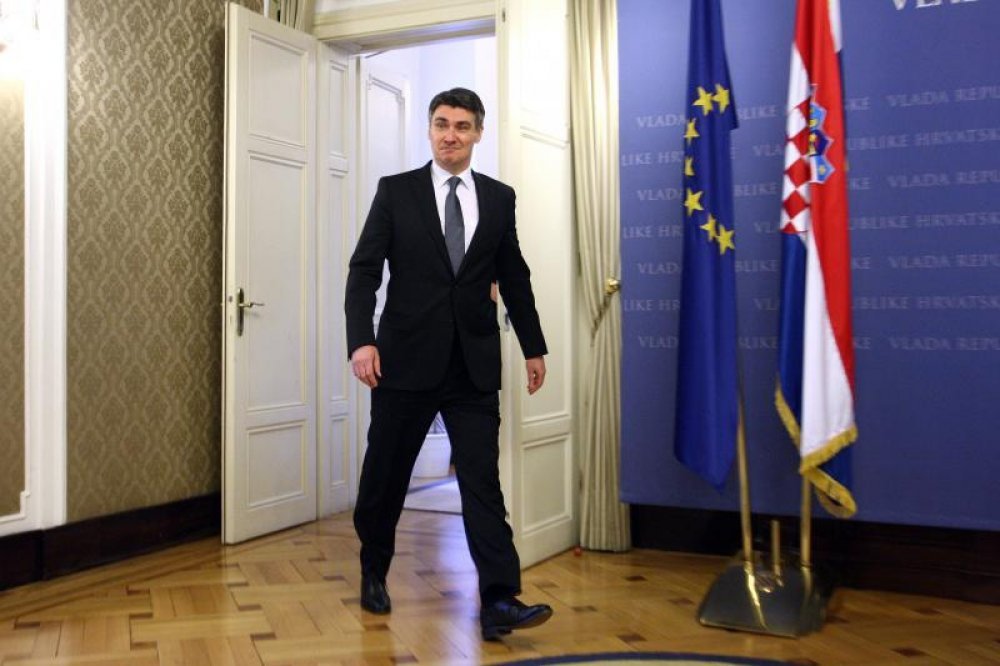

Croatian Prime Minister Zoran Milanovic told a news conference in Zagreb on Friday that the text of a solution to the Ljubljanska Bank (LB) dispute with Slovenia must be defined within principles which were generally known, and that time frames for this process was something that should be referred to the Slovenian side.
"Having in mind the political situation in Slovenia, we must in the near future agree on a text within the principles that are more or less known," Milanovic said at the news conference which he convened following heated debates on a date when Croatia should hold elections for its deputies to the European Parliament.
Milanovic said that when it came to the LB issue, Croatia's position is clear.
"The issue concerning the transferred savings is clear, it is clear that it is different from the issue of the savings which have not been transferred, the legal nature of that debt is clear, it is clear who should pay back that, it is clear that we believe that certain proceedings before Croatia courts, which have been going on for 20 years, should and can be put on hold, but they should not be fully terminated," Milanovic said.
Croatia and Slovenia are trying to reach a deal on the dispute over the now defunct bank and its debt to Croatian clients regarding the savings they transferred from LB subsidiaries in Croatia to Croatian banks in the early 1990s and who were later compensated by the Croatian state. According to statistics of the Croatian National Bank (HNB), the so-called transferred savings totalled some 545 million German marks, and the Croatian government provided Zagrebacka Banka and Privredna Banka Zagreb with power of attorney for lawsuits against LB for the coverage of that sum. Non-transferred savings totalled approximately 312 million German marks, and in this case Croatian citizens are conducting legal actions on their own in private lawsuits.
As for the case of non-transferred savings, on 6 November 2012, the European Court of Human Rights (ECHR) ruled that the Republic of Slovenia was liable for the payback of "old" foreign-currency savings to clients of Ljubljanska Banka outside Slovenia. That judgment is not final as the parties have three months to file an appeal with the ECHR Grand Chamber.
PM Milanovic said today that the issue of LB and Croatian citizens' savings deposits in that bank was simpler than the issue of demarcation of the borderline between Croatia and Slovenia in Savudrija Bay. The two countries have agreed to refer the dispute to a five-member international Arbitral Tribunal.
However, the issues surrounding the LB dispute hold back the ratification of Croatia's Treaty of Accession to the European Union in the Slovenian Parliament. Croatia is set to join the EU ion 1 July, while Slovenia has not yet launched the ratification procedure.
Asked by the press whether there were any deadlines, Milanovic said that this question should be forwarded to Slovenia.
"General European deadlines are known, there are some Slovenian deadlines regarding the future of the Slovenian government following the departure of some of the partners from the ruling coalition," Milanovic said.
"Unfortunately, a combination of a political crisis and some unresolved issues emanating from the past are now forcing us to look for ad hoc solutions and I believe we will find them," the Croatian premier said referring to the political situation in Slovenia and a possibility of an early election being held there.
During their meeting in Slovenia on 6 February, Croatian and Slovenian delegations said they had reached an agreement on the LB issue and that they would hold another round of talks on 19 February provided that the governments in Zagreb and Ljubljana gave a go-ahead for that deal. The delegations would not discuss details of the deal before receiving a greenlight from their respective governments.