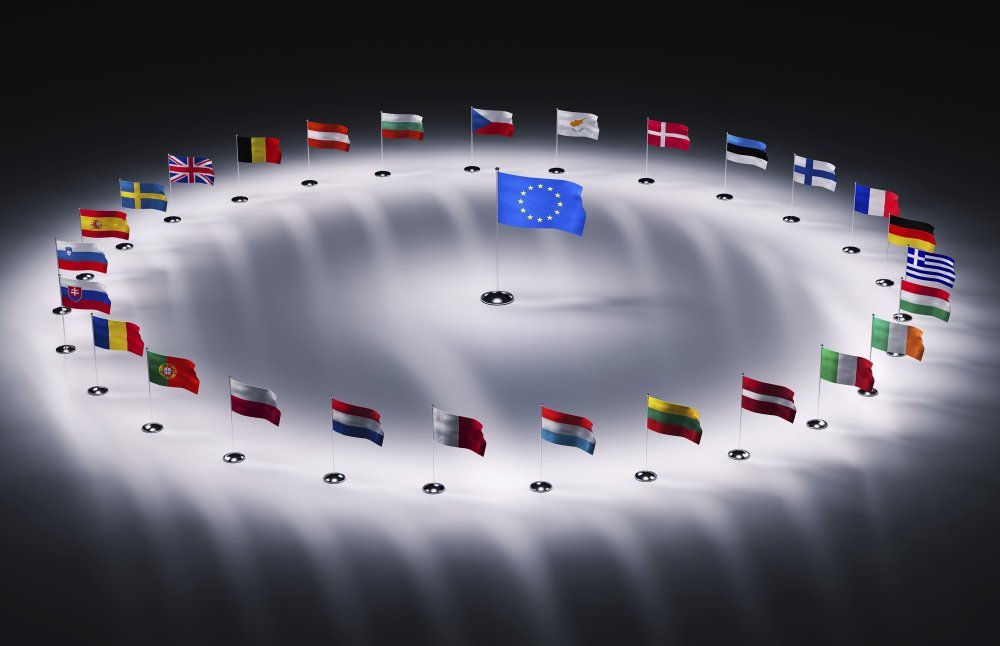

Ireland took over the six-month rotating presidency over the European Union on 1 January, and this is Ireland's seventh turn at the EU helm, and by chance it coincides with the 40th anniversary of Ireland’s joining the EU. Ireland took over the stewardship of the 27-member EU from Cyprus on Tuesday, and will hand over to Lithuania in July.
Ireland is the last rotating chair of the EU before Croatia's entry into the 27-strong bloc, set for 1 July 2013.
Presenting the priorities of her country's EU Presidency in Brussels in mid-December, Irish Minister of State for European Affairs Lucinda Creighton said that Ireland was confident that the process of ratifying Croatia's Treaty of Accession with the European Union should go smoothly and believed that possible problems with Slovenia should be resolved bilaterally and must not obstruct the accession process.
We are confident that the ratification process will proceed smoothly and that Croatia will enter the bloc on 1 July 2013. We will closely cooperate with Croatian colleagues with whom we have excellent relations so as to avoid possible difficulties during our six-month EU chair, said Creighton who, together with Irish Foreign Affairs Minister Eamon Gilmore, presented the priorities of Irish EU presidency. Asked about possible difficulties in the ratification of Croatia's EU accession treaty in Slovenia, Creighton said bilateral issues must not obstruct the process.
Creighton also said that they would closely cooperate with their Croatian counterparts so as to avoid possible problems.
I know that in its report (on Croatia) in October the Commission highlighted the need to continue with the momentum in the reform process and I believe that it will happen, she said then.
Economic stability, growth and jobs are Ireland’s priorities for the next six months as it took over the EU presidency from Cyprus.
"Ireland will push ahead with the compact on growth and jobs – a package of measures addressing fiscal consolidation, lending, unemployment, international trade and other areas with the potential to create growth and jobs," according to the web site of the Irish EU presidency.
"Other priorities include new rules: on the recognition of professional qualifications in other EU countries; modernising public procurement; and, making clear the rights of workers posted abroad within the EU."
"To stimulate innovation and research, Ireland will seek to conclude negotiations on the next round of EU funding, known as the Horizon 2020 programme, and will in particular promote nanotechnology, photonics, advanced manufacturing, cloud computing and high-speed computing."
As for the economy, "to restore confidence in the European economy, Ireland will ensure that the new EU system for economic and budgetary coordination includes a focus on fundamental issues, such as wages, wage indexation, labour market reforms, pensions, education and poverty."
In addition to initiatives intended to promote growth and jobs, Ireland will also stress the environment, transport, new countries joining the EU, justice and support for development.
During the Irish EU presidency, one of the biggest challenges will be to reach agreement on the EU's budget for 2014-2020. A new meeting will take place under the Irish presidency and "once the overall figures have been agreed, Ireland will focus on how the budget is divided between policy areas."