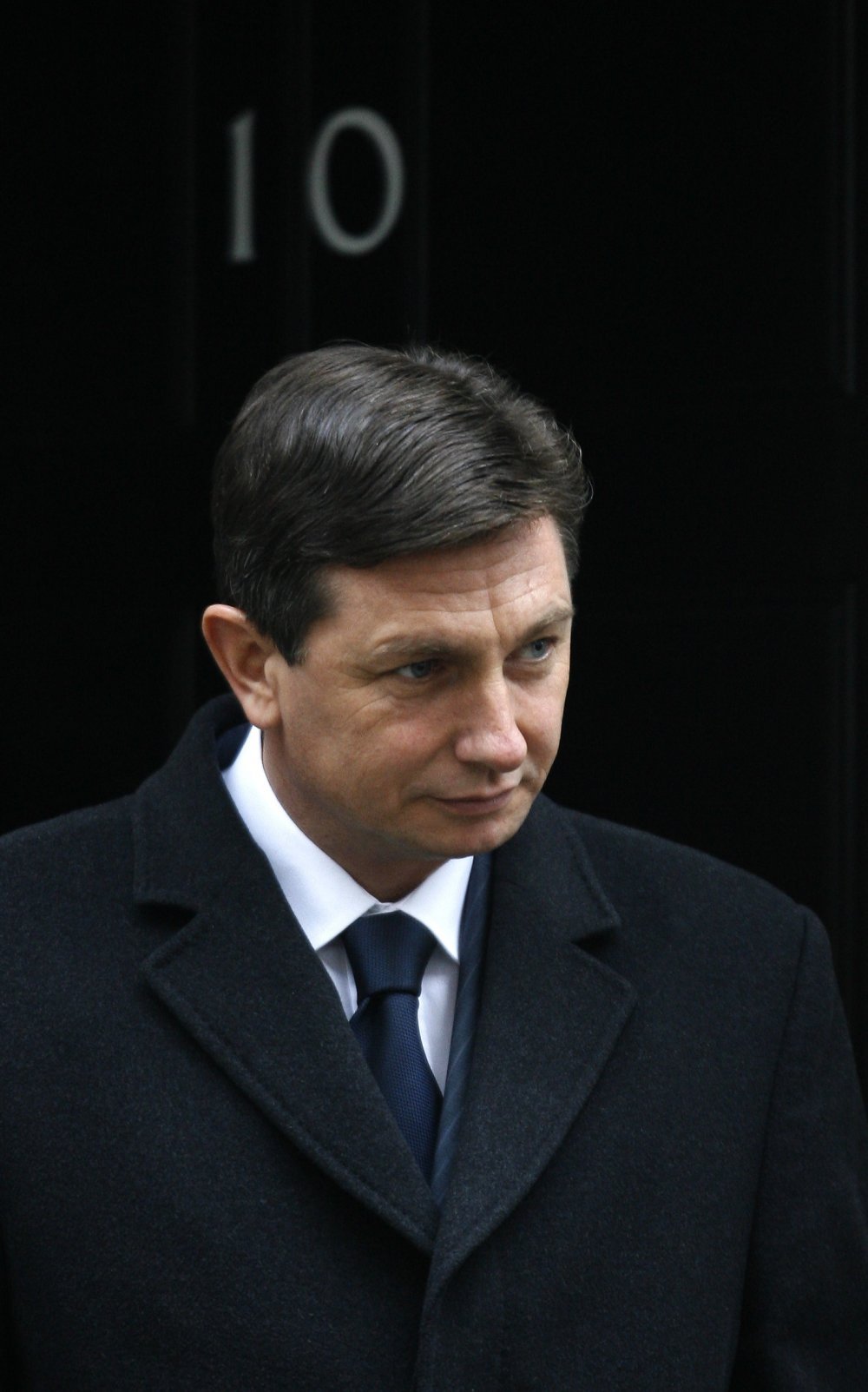

Leaders of Slovenian parliamentary parties and Prime Minister Borut Pahor agreed on Friday that the ratification of a border arbitration agreement with Croatia would first be decided by the parliament, after which a referendum would be held on the matter.
"It is our joint position that citizens should decide on the agreement in a referendum," Pahor said after an hour-long meeting with leaders of parliamentary parties.
Pahor explained that the referendum would be a so-called subsequent legislative referendum, to be held after the parliament decides on the arbitration agreement next month. The media estimate the referendum could be held in June.
Addressing reporters after the meeting, Pahor said that the government would suggest that MPs of the ruling coalition withdraw from parliamentary procedure the proposal for holding a non-binding advisory referendum which they previously sent to parliament, and that they put forward a new proposal on holding a binding legislative referendum, once the parliament ratified the arbitration agreement.
The outcome of the subsequent legislative referendum would be binding, which means that the final decision on the arbitration agreement would be made by citizens, Pahor said, adding that it was only right that citizens should have the final say on such an important issue.
The parties attending the meeting did not decide what kind of majority vote the parliament would need to ratify the arbitration agreement.
The leader of the ruling coalition party Zares, Gregor Golobic, said that the parliament's legal department would state its position on the matter, but that the government believed that simple majority support was enough for the ratification.
That view was not shared by the Slovenian Democratic Party (SDS) and the Slovenian People's Party (SLS), whose leaders Janez Jansa and Radovan Zerjav said that a two-thirds majority vote was required for deciding on such an important matter.
If the parliament ratifies the arbitration agreement, and the agreement is then rejected in the referendum, Slovenia could find itself in a position where its international credibility is compromised, Slovenian legal experts said in a comment on the referendum decision.
The arbitration agreement on the settlement of the Croatian-Slovenian border dispute was signed by Croatian Prime Minister Jadranka Kosor and her Slovenian counterpart Borut Pahor in Stockholm on 4 November 2009.