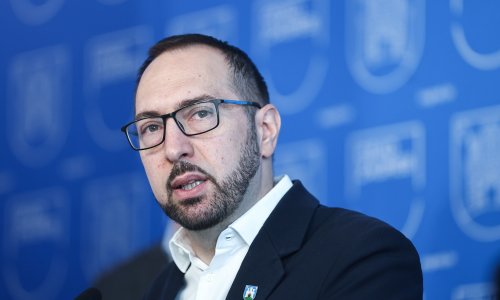
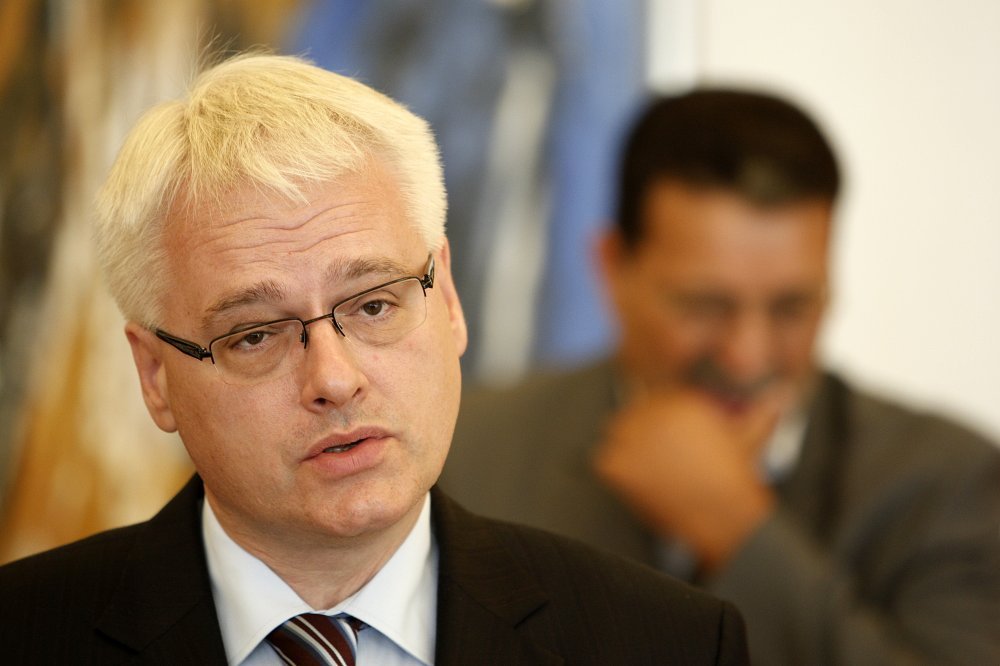

Croatian President Ivo Josipovic opened in Medulin on Monday the Political Science Summer School, which brought together 30 representatives from Croatia, Serbia and Slovenia and focuses on politics and security in Southeast Europe.
The lecturers at the five-day event are professors from the Zagreb and Belgrade schools of political science and the Ljubljana School of Social Sciences.
Addressing the students and the lecturers, Josipovic said Croatia's regional policy was part of its European policy.
"Cooperation with countries in the region and the best possible relations are part of our path to Europe and Croatia, once it has an opportunity to impact processes in Europe as a member of the European Union, will certainly insist that our neighbouring countries become EU members, once they meet all requirements, of course," he said.
Josipovic said he considered this Political Science Summer School and its focus on politics and security in Southeast Europe part of a struggle for the principles of cooperation, reconciliation and a common future in Europe.
He described as valuable the cooperation between the universities of Zagreb, Belgrade and Ljubljana, saying it was one of the footholds of regional cooperation in science.
"I think that all countries in the region, not only those from the former Yugoslavia, can and must cooperate, as countries that don't cooperate fall behind because they are closed and don't see further than their borders, which isn't good," Josipovic said, adding that cooperation was in everyone's interest in the region on the road to Europe.
"Slovenia is an EU member, Croatia will become one very soon and I'm sure than Serbia, Montenegro, and Bosnia and Herzegovina will become EU members in the foreseeable future. That's our common interest for the sake of security, partnership and prosperity in this region."
He added that good cooperation between the countries in the region and their future membership of the EU was conducive to security, and that the time had come "to introduce partnership, as opposed to leadership".
"Political processes between different countries are very often blocked because of competition as to which country is the leader and in charge. There will be no good results in the region if someone presumes to be the boss. Partnership and understanding one's own as well as others' interests is the key to success," Josipovic said, adding that Croatia's partnerships with Slovenia and Serbia showed it best.
He said economic prosperity was also important.
"Whoever thinks that our country, globally speaking, can beat Germany or France, isn't realistic. The key to our success is market expansion. We must all increase our exports and strengthen our economies in the region as well as in other markets," said Josipovic.