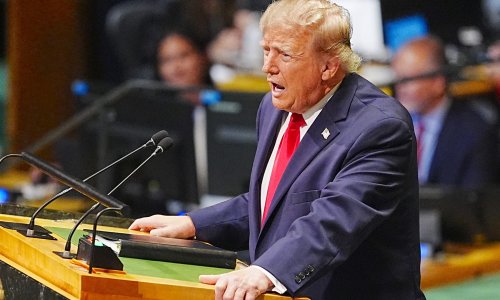
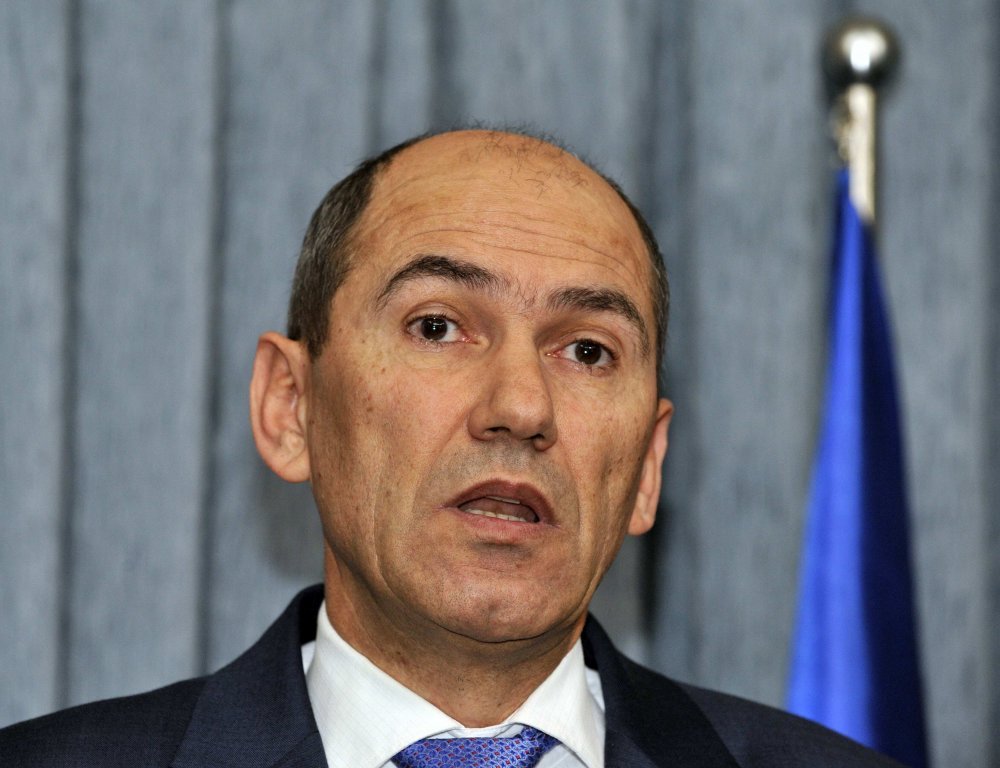

Slovenian Prime Minister Janez Jansa said on Thursday that ratifying Croatia's Treaty of Accession with the European Union in time was one of the reasons why he did not want to step down, after a junior partner - the Civic List (GL) - the day before left the governing coalition, whereby the Jansa cabinet and the coalition led by his Slovenian Democratic Party (SDS) lost a majority in the 90-seat national parliament.
Jansa held a news conference to explain why it was out of the question for him to resign and why he would not ask for a vote of confidence in his government as this would mean the fall of his minority cabinet.
The premier explained that the fall of his government would pave the way for unnecessary early elections and a power vacuum in which it would be impossible to secure a two-thirds majority support for some moves such as constitutional changes and calling a referendum on the state's financial affairs.
Also, a two-thirds vote is necessary in the Slovenian parliament to ratify Croatia's EU treaty, Jansa said, adding that such a majority could be provided only in cooperation with all political parties in the current national law-making body.
"The things are not completely clear. What we, the European Union and Croatia want the least now is a long political crisis with an election campaign and the ratification of Croatia's treaty being one of the topics in that campaign," Jansa said.
Asked by reporters whether Slovenia still made the ratification of the Croatia-EU treaty conditional on the withdrawal of Zagreb's power of attorney for lawsuits against the now defunct Ljubljanska Banka, Jansa said that Slovenia and the EU shared the same position that Croatia should "honour all ratified agreements," including the agreement on succession to the former Socialist Federal Republic of Yugoslavia.
"In this context, Slovenia considers this issue exhausted as it concerns succession," Jansa stressed.
Next week Croatian and Slovenian experts Zdravko Rogic and France Arhar are due to meet next week to discuss Ljubljanska Banka and forward their proposal to their respective governments. Now, Slovenia waits for this proposal to launch a procedure in its parliament for the ratification of the Croatia-EU treaty. Slovenia insists on the withdrawal of the lawsuits, and Croatia now does not rule out this possibility, provided the two governments accept a proposal to be set up by the two experts.
Jansa also accused those who were undermining his cabinet of being unaware of the seriousness of the situation in the country.
The GL party, a member of Slovenia's five-party coalition government, decided on Wednesday to resign from the ruling coalition after Jansa had not resigned within a period of ten days, which was their condition for staying in the coalition. The GL, which has seven seats in the 90-seat parliament, demanded Jansa's resignation after an anti-corruption commission found that he and the Mayor of Ljubljana, Zoran Jankovic, had systematically and repeatedly violated anti-corruption legislation and failed to report all of their assets and bank accounts to the commission. Gregor Virant said that parliament would be formally notified on Monday that the GL's two ministers in the government, Finance Minister Janez Sustersic and Public Administration Minister Senko Plicanic, were resigning, and he himself would step down as Speaker of Parliament.
The GL's move further deepens the political crisis in the country and threatens an early election as the Democratic Party of Pensioners (DESUS) and the Slovenian People's Party (SLS) have already announced their departure from the government.
Jansa said today that the claims from the anti-corruption commission were "an example of political inquisition".