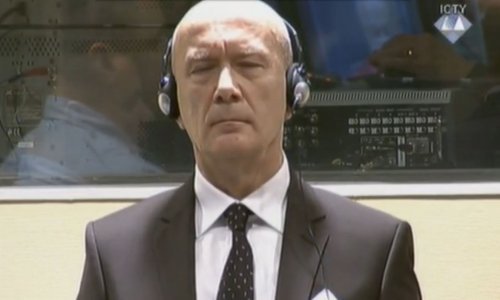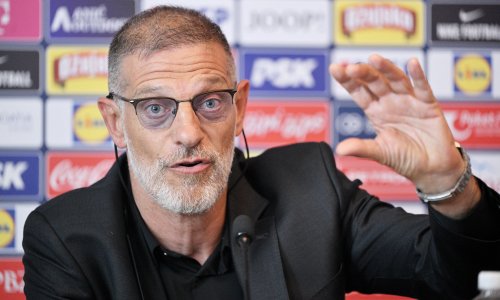
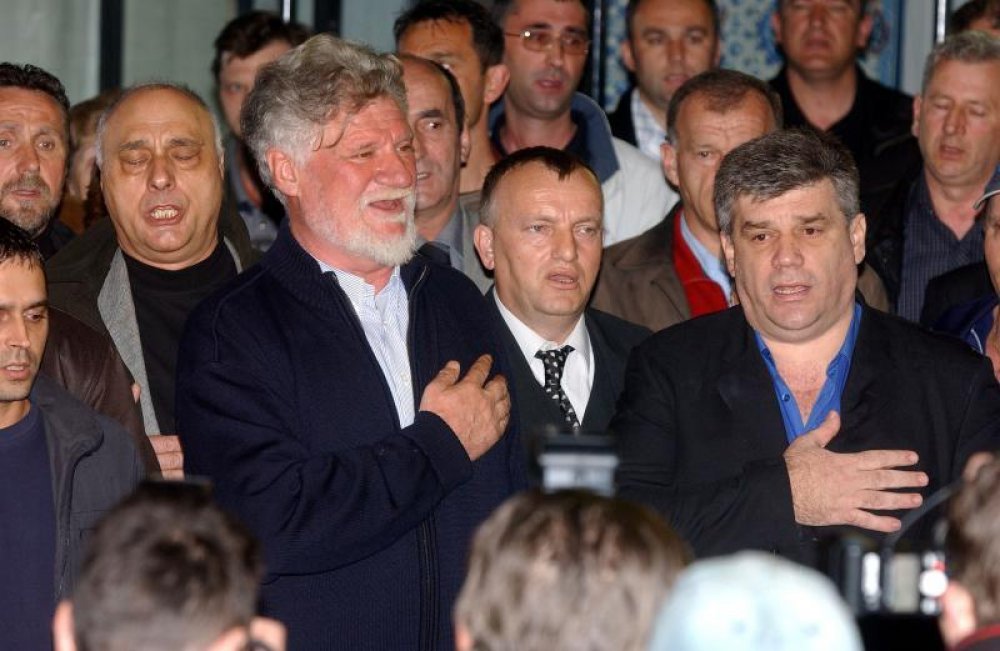

A former commander of the Bosnian Croat Defence Council (HVO), Slobodan Praljak, told the Hague war crimes tribunal on Monday, at the end of his lawyers' closing argument, that his conscience was clear and that he knew he was not guilty of war crimes as well as that the Croatian policy in the early 1990s had been directed at helping the Muslim side and the survival of Bosnia and Herzegovina.
Praljak said he had done a lot for the Bosniaks.
Never in the history of warfare had one people, in this case the Croats, helped another people, the Bosniaks-Muslims, even when this people turned against it, said Praljak.
He said that during the early 1990s war in Bosnia, Croatia had organised on its territory the training of Muslim police, Bosnian Army pilots, the training and equipping of entire Bosnian Army units, had provided care for hundreds of thousands of Bosniak refugees, organised their schooling in the Bosniak language, the armament of the Bosnian army, medical provisions, the medical treatment of 10,000 Bosnian Army fighters, the arrival of thousands of Mujahedeen into the Bosnian Army and allowed that it set up rear centres in Croatia.
All that was done for free, said Praljak.
He said that never before had a commander allowed the passage of arms convoys for the other side, in this case the Bosnian Army, which he said had then used the arms to attack the forces that had allowed the convoys to pass through.
He recalled that the Croats had supported Bosnia and Herzegovina's independence at a referendum, that Croatia had recognised Bosnia and Herzegovina, appointed an ambassador, and that the Croats had been the first to sign all international proposals on Bosnia and Herzegovina's structure.
Praljak said this had been the policy of Croatia's President Franjo Tudjman, government and parliament, as well as of the HVO, adding that it was insulting of the prosecution to claim that those were elements of a joint criminal enterprise.
What the prosecution calls nationalism was for the Croats the need for freedom, he said, adding that he was not renouncing either Tudjman's policy or the purpose of setting up the former Croat Community Herceg Bosna.
Commenting on the parallels with Nazism and the Holocaust that were drawn by the prosecution in its closing statement with regard to the defendants and the alleged participants in the joint criminal enterprise, Praljak ironically referred to himself as Hermann Goering, one of the leading Nazi officials who had also saved some Jews.
Referring to himself in the third person, Praljak said that "this Goering-Praljak" had put the "Jews-Muslims" in his summer house and flat, protected captured Yugoslav Army soldiers with his own body, saved Serb civilians from the Dretelj detention camp, organised the escape of 15,000 "Jews-Muslims" from Stolac, allowed the release of "Jews-Muslims", prevented a retaliation after the "Jews-Muslims" committed a crime in Uzdolje, and organised the construction of a road so that the "Jews-Muslims" could take refugee in "Goering's Croatia".
Praljak suggested that behind the indictment which charged him with crimes committed as part of the joint criminal enterprise was the anti-Croat atmosphere in the office of former chief prosecutor Carla del Ponte.
Praljak questioned the equity of the trial, saying the laws of the International Criminal Tribunal for the former Yugoslavia did not apply to Americans, that International Criminal Court laws applied to others, and that he was being tried under different laws.
After Praljak, the defence of General Milivoj Petkovic began its closing argument. Petkovic was Praljak's predecessor as HVO chief of staff.