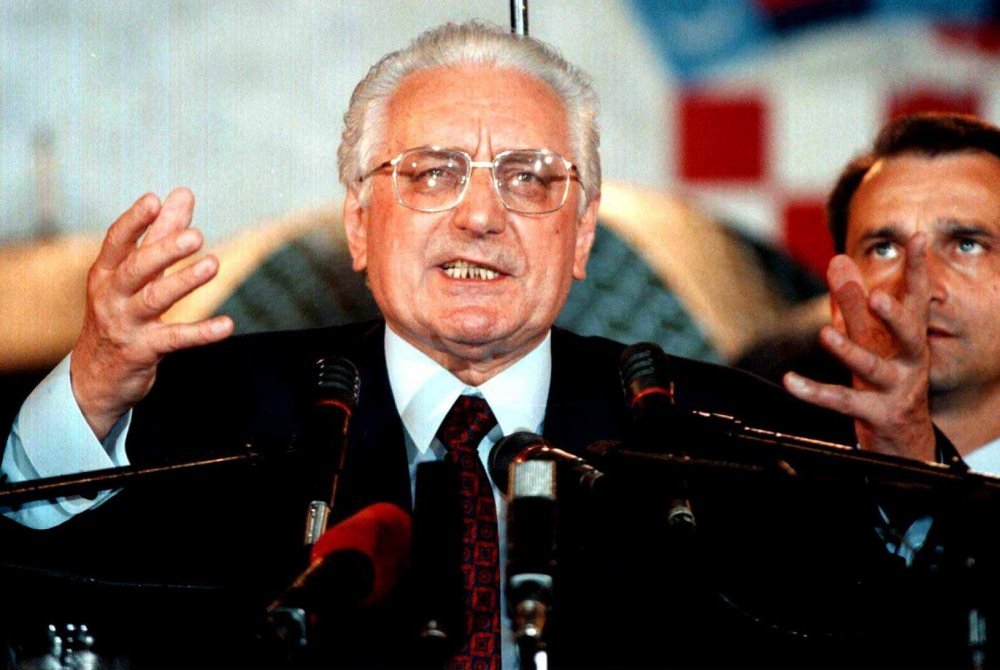

Croatia on Saturday marks the 12th anniversary of the death of its first president, Franjo Tudjman, who led the country to independence from Yugoslavia 20 years ago.
Born in Veliko Trgovisce in 1922, Tudjman took an active part in the anti-fascist resistance movement in World War Two, and was later incarcerated for his views on the Croatian national issue in the Yugoslav federation.
In 1972, when the prosecution of leaders of the Croatian Spring movement had begun, Tudjman spent nine months in prison, and in 1981 he was sentenced to a three-year prison term and was forbidden to take part in any public activity for five years.
After he had his passport returned to him in 1987, he travelled abroad several times and held lectures among Croatian emigrants, advocating the creation of a Croatian national movement. Two years later he established the Croatian Democratic Union (HDZ) and became its first president, the post he held until his death.
Tudjman formally assumed the leadership of Croatia in late May 1990 when he was elected by the first multiparty Parliament as President of the Presidency of Croatia. He became President of the Republic on June 26 of the same year.
Tudjman struggled for the independence and international recognition of the Croatian state in politically unpropitious times. Against a background of international pressure to maintain Yugoslavia, he led all major operations in the 1991-1995 Homeland War and in the liberation and reintegration of occupied areas of Croatia.
There have been differing views of his political activity. His critics claim that he was authoritarian, that he allowed tycoons to run the state, that he was unsympathetic to people who did not share his political views, and that he attempted to carve up neighbouring Bosnia and Herzegovina. His advocates emphasise that his policy towards Bosnia and Herzegovina was aimed at protecting the interests of the Croats living there, and that wartime required "rule with an iron fist".
Tudjman was twice elected President by direct ballot - in the first direct presidential election in 1992 and in 1995. He did not complete his second term in office because he died on 10 December 1999.