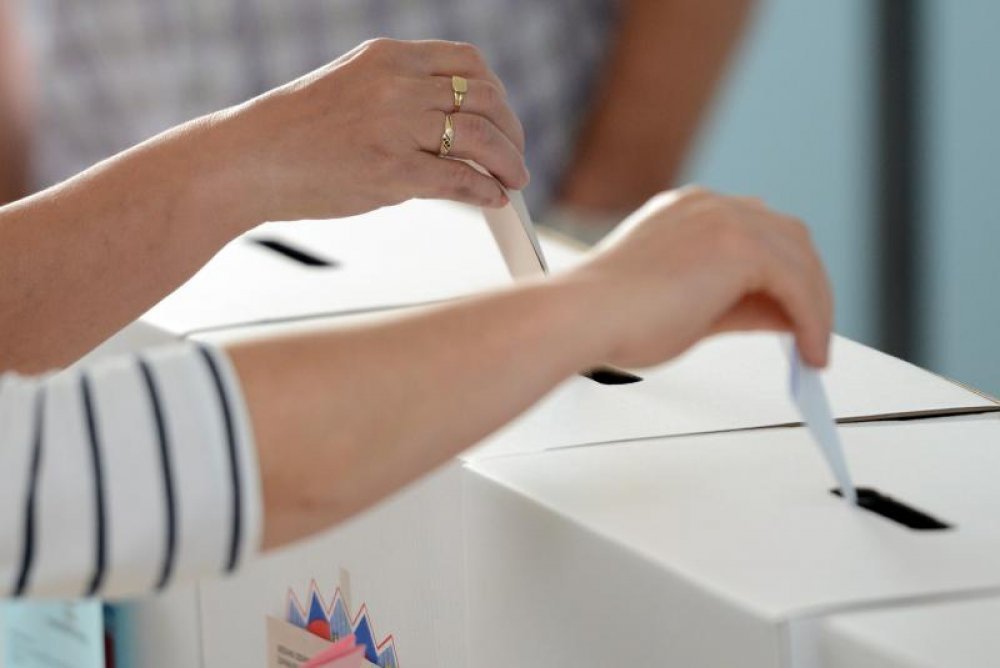

Zagreb, the capital of Croatia, and the other three biggest cities in the country -- Split, Rijeka and Osijek -- will elect their mayors on Sunday when the second round of elections polls is due to take place anywhere where none of mayoral candidates managed to muster over 50% of the vote at the first round of vote on 19 May.
Thus, the two top vote-getters will face each other for the mayoral posts also in another 15 cities - Varazdin, Karlovac, Krapina, Sibenik, Dubrovnik, Bjelovar, Koprivnica, Zadar, Vukovar, Sisak, Slavonski Brod, Pazin, Gospic, Pozega and Pula as well as for the posts of county prefects in 11 counties, out of a total of 20 counties. The other nine counties had the outright victors after the first round.
In the most cases, the rivals are from coalitions led by the Social Democratic Party (SDP), which is the senior partner in the governing majority at the state level, and by the strongest opposition party, the Croatian Democratic Union (HDZ).
However, Zagreb is the venue of the competition between the current mayor Milan Bandic, who is now a nonparty candidate after he fell out with the SDP leadership a few years ago, and the SDP candidate Rajko Ostojic, the incumbent health minister. Bandic is entering the second round after having won 47.2%, while SDP candidate Ostojic mustered 22.8% on 19 May.
The biggest Croatian Adriatic city of Split will be governed in the next four years either by SDP candidate Ivo Baldasar or the HDZ candidate Vjekoslav Ivanisevic, after they fared better in the first round than the outgoing mayor Zeljko Kerum.
In Rijeka, the incumbent mayor Vojko Obersnel of the SDP, who has been serving as the mayor in this biggest Croatian seaport since 2000, will compete with the HDZ candidate Hrvoje Buric. Obersnel was close to make it in the first round when he garnered 48.06%. Buric from the HDZ-led coalition won 16.09%.
In Osijek, the current mayor Kresimir Bubalo of the regional Croatian Demcoratic Party of Slavonia and Baranja (HDSSB) will vie with Ivica Vrkic an independent candidate whose candidacy is supported by the SDP and its coalition partners: the Croatian People's Party (HNS) and the Croatian Pensioners' Party (HSU).
Eight counties that got their prefects in the first round of voting on 19 May, re-elected their incumbents. The ninth county with the outright victor voted for the same party coalition that changed its candidate this time. Thus, the same HDZ prefects remain at the helm in those four counties: Dubrovnik-Neretva, Virovitica-Podravina. Vukovar-Srijem and Slavonski Brod-Posavina, the HDZ also remains at the helm of Lika Senj County, but this time with its another official.
The SDP prefects in Primorje-Gorski Kotar and Krapina-Zagorje Counties was re-elected in the first round of voting.
The prefects coming from the Croatian Peasant Party (HSS) were re-elected for the counties of Zagreb and Koprivnica-Krizevci on 19 May.
On the other hand, coalition partners in the government, the SDP and the HNS, will compete against each other when it comes to the runoff for the county prefects in Medjimurje and Bjelovar-Bilogora.
Similarly in Istria, the Istrian Democratic Party (IDS), a junior partner in the cabinet of the SDP Prime Minister Zoran Milanovic, has its candidate for the county prefect, Valter Flego, who will face off Damir Kajin, a former IDS official now supported by the SDP, in Sunday's runoff. The state-level coalition is split in Istria with the HNS taking sides with the IDS and the HSU being in the bloc with the SDP during these local elections.
GONG, a nongovernmental organisation in charge of monitoring election processes in Croatia, on Thursday called on political parties, slates of non-party candidates and other stakeholders to abide by fair play rules on Sunday. As many as 31 mobile teams of GONG observers will be engaged for the runoff on 2 June.